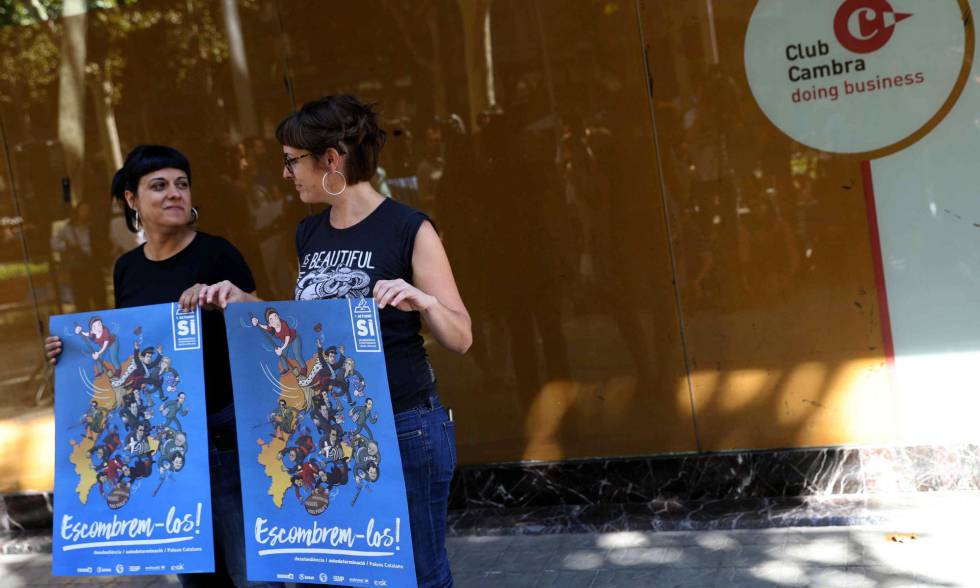
Sobramos muchos, según el eslogan. Sobran la UE, la Monarquía… Sobran “las fuerzas españolas” el Real Madrid, el Atlético, el Museo del Prado, la Alhambra, todos los aeropuertos, Todos los templos, basílicas y catedrales, la Movida Madrileña, el Teide que surge del suelo, el María Guerrero, el Café Gijón, la playa del Sardinero, el Museo Picasso de Málaga, universidades y alumnos que estudien, Los poetas, los gorriones, los mendigos, los tristes, el flamenco, los pobres, los ricos.
Como si siguieran la antigua senda del Tramabús de Podemos, le ponen nombre y cara a lo peor de España, lo que hay que barrer para que todo sea bello y catalán. Nombran a la UE, al Rey, a su hermana Cristina, a Rajoy, a Aznar. Y nombran a Pujol y a Mas; a este último la CUP lo sometió a un empate absoluto que dejó paso a Puigdemont. A este ya lo borrarán, si se desvía. Y no nombran más, pero avisan. Quieren borrar el capitalismo (¿todo el capitalismo?, ¿el capitalismo catalán, el ruso, el francés, el capitalismo turístico?), y quieren borrar el patriarcado. ¿El patriarcado? ¿Están seguros de haber usado bien el diccionario de sinónimos? Quieren barrer la corrupción, como si en otro lugar le quisieran poner un monumento.
Y quieren abolir la Monarquía. Cómo no. Un viejo rector madrileño recibió en el franquismo a un grupo de estudiantes que hacían bulla en la puerta. “¿Qué quieren?”, preguntó el venerable profesor. “Derrocar a Franco”, le dijeron. Y el rector les respondió: “Muy bien. Pero para eso tendremos que seguir unos procedimientos”. Anna Gabriel, la CUP y sus secuaces lo dicen nada más empezar el discurso: ¡Barrámoslos!”.
Es una escoba con muchas agallas. Con interjecciones, con apremio, como si estuviera en peligro de muerte el enfermo catalán. Acompañarán a los barredores un ejército, catalán por supuesto, matando a su paso a todo ser viviente “¡Barrámoslos! Desobediencia, autodeterminación, Països Catalans”.
Si Anna Gabriel estuviera en la escuela, sería convidada por su maestro o maestra a buscar significados de cada uno de los tres mandamientos, interjecciones incluidas. Empezando por el mandato de desobediencia. Depende de a dónde apunte la orden.
“¡Barrámoslos!” se dijo mucho en la historia, aquí también, y en Alemania, y en África del Sur, y bajo Stalin. Gente que no merecía estar ni en el territorio ni en la vida. Borrarlos, barrerlos, ¡que no salieran ni en las fotos! Los que desobedecieron el mandamiento padecieron, en esos casos, en España también, y también en Cataluña, destierro, prisión o muerte.
Barrer a otros es un asunto muy serio, delito histórico, paredón y después... Se hace con las personas, con la basura, cuando esta se acumula y la salud se resiente. En este caso parece que la basura es perentoria, por las interjecciones que ha regalado Anna Gabriel. Si ella supiera de veras qué ha supuesto barrer en la historia, no hubiera añadido ahora ese agravio tan sucio a su dictamen vejatorio sobre todo para los catalanes. El eslogan es, no cabe duda, un insulto. Contra Anna Gabriel, contra los suyos.


