Mostrando entradas con la etiqueta la Alhambra. Mostrar todas las entradas

La Alhambra , una joya del arte nazarí en Granada


España posee un impresionante patrimonio artístico. Desde las primeras civilizaciones que poblaron la Península Ibérica hasta la actualidad, multitud de culturas han vivido en nuestro territorio, dejando una herencia artística que constituye un auténtico legado de la humanidad. Siglos de creación humana y convivencia han quedado patentes en innumerables obras de arte en todas las disciplinas y todos los estilos.

El arte español cuenta con un estilo artístico propio: el mudéjar
Joyas de la arquitectura, literatura, pintura o escultura se conservan diseminadas por todo el territorio español. Son conjuntos monumentales al aire libre y obras maestras que se pueden admirar en museos, bibliotecas, archivos, salas de exposiciones y en edificios religiosos de distintas confesiones.

La creación artística está presente en nuestro país desde la Prehistoria. El ejemplo más espectacular son las Cuevas de Altamira, el primer lugar en el mundo en el que se identificó la existencia del Arte Rupestre del Paleolítico Superior. A este periodo le siguen, cronológicamente, las creaciones de los pueblos mediterráneos (griegos, fenicios y cartagineses), la maestría urbanística romana en el siglo I, el arte paleocristiano en el siglo III y el arte visigodo en el V.

Los diferentes pueblos y culturas nos han dejado como herencia un enorme y diverso patrimonio arqueológico y artístico que perdura hasta nuestros días, gracias a una sostenida labor de conservación. La cultura musulmana ha dejado joyas como la ciudad de Medina Azahara en Córdoba o la impresionante Alhambra de Granada; el norte de Palencia y el Vallé de Arán en Lleida conservan grandes obras del mejor románico y las Catedrales de Burgos y León son máximas expresiones del arte gótico español.

El arte español cuenta con un estilo artístico propio: el mudéjar, fusión del arte cristiano y del musulmán y reflejo de la transferencia de conocimientos entre españoles y árabes. A finales del siglo XV, domina el arte renacentista, llegado desde Italia, y que se materializa en el monasterio de El Escorial o las esculturas de Alonso Berruguete. En los Siglos de Oro (XVI y XVII) se produce una eclosión cultural sin precedentes que tuvo en el barroco su mayor expresión artística. En el siglo XVIII, empieza a ganar terreno el neoclasicismo, presente arquitectónicamente en el Palacio Real de Madrid o La Granja de San Ildefonso y con Francisco de Goya, dominando la pintura.

En el siglo XIX, llega el romanticismo mientras el modernismo triunfa en Cataluña, con Antonio Gaudí como artista de referencia. Diversos estilos artísticos jalonan el siglo XX que en la década de los años 50 comienza a abrirse a las nuevas tendencias de vanguardia, con grandes creadores que alcanzan fama mundial como Pablo Picasso, Joan Miró y Salvador Dalí.


En la actualidad, la creatividad en España abunda en todas las disciplinas y estilos artísticos, aumentando el impresionante acervo cultural que atesoramos.

España necesita una revolución, no reformas.


La muerte de Marat
Según el Gobierno de España y lo avalamos sus gobernados, la situación económica española, ciertamente, es crítica. Este análisis, NO justifica  los palos de ciego  que el Gobierno del PP está  adoptado o en vías de hacerlo tanto en el plano laboral, financiero y presupuestario; los presupuestos no solo no son coherentes para hacer frente a una crisis palpable, sencillamente, son provocadores. A veces me pregunto: ¿nuestra crisis es meramente de capital y solicita como terapia únicamente ahorro, austeridad y reducciones brutales de gastos y sueldos? ¿No será la cosa mucho peor y lo que nos ocurre consiste en una obsolescencia de nuestro sistema productivo, una carencia de proyecto sólido como nación y una podredumbre de nuestros valores culturales? Si ello fuera así, las reformas resultarían claramente insuficientes y lo que realmente precisaríamos sería una revolución.
Al emplear el vocablo "revolución" (por otra parte tan manoseado, instrumentalizado y traicionado, como todas las apelaciones a lo absoluto), no pretendo referirme, claro está, a una ruptura del orden constitucional para imponer desde el BOE una nueva sociedad, un nuevo modo de pensar y hasta un nuevo paradigma de ser humano. De la mórbida seducción de tales quimeras nos encontramos ya casi todos curados. La revolución que tal vez necesitemos demandaría, desde luego, alta cantidad de voluntarismo, pero no habría de tratarse de un acto único, sino de un esfuerzo largo y sostenido basado en la aquiescencia de los dos grandes partidos nacionales, aunque creo que tal para cual son novios políticos; proferido mediante un pacto de Estado por la modernización de España. 
Para llevar acabo lo anterior hay que saber  si estamos dispuestos a cambiar de mentalidad y a aceptar que la miscelánea de factores como persistencia a ultranza en un trabajo de escasa cualificación, baja productividad, abandono escolar, niveles ínfimos de inversión en investigación, desarrollo e innovación, PYMES sin adecuada base tecnológica, burbuja inmobiliaria, turismo de sol y paella y empleos públicos blindados sólo nos puede conducir, en un escenario económico plenamente globalizado, a posiciones propias del Tercer Mundo. Frente a esto nos hace falta: 1) cientos de miles de emprendedores, no simples empresarios; 2) decidida apuesta presupuestaria y tributaria por el desarrollo científico/técnico; 3) potenciación de la educación a lo largo de toda la vida; 4) reducción del número de Universidades y conexión de las mismas con el tejido productivo a través de fuertes incentivos fiscales a las empresas implicadas en esa relación; y 5) unas administraciones públicas eficientes servidas por gestores motivados y que actúen bajo un régimen contractual, no funcionarial.
Sin lugar a dudas precisamos  políticos mejor pagados y preparados Lo que hay cobra poco, pero creo que el sueldo va en consonancia con sus neuronas. Un congreso donde la mayoría no supera el bachiller, MALO. Los sueldos actuales de quienes ocupan cargos públicos únicamente pueden atraer, por regla general y con las honrosas excepciones que haya, a individuos mediocres o corruptibles -Hay más de 5.000 casos de corrupción pendiente de ser juzgados. En cambio, los partidos, los sindicatos y las organizaciones empresariales deben financiarse exclusivamente por sus militantes y afiliados y no sobre todo mediante subvenciones estatales, como ahora sucede. Así se combatiría su oligarquía y se cumpliría el mandato constitucional de democracia interna, aunque pueden hacerlo y no lo harán.
Nuestras universidades base  de la transformación profunda que el país requiere, deben cambiar radicalmente su forma de dirección y el estatuto de su docencia de mayor nivel. Para mí, la concepción dominante de la autonomía universitaria únicamente conduce al corporativismo, la endogamia, el caciquismo y el clientelismo. En las tres últimas décadas, intentando superar de buena fe la pesada losa del franquismo, todos hemos hecho lo inenarrable para imposibilitar la construcción de una institución universitaria moderna al servicio de los intereses generales. No acierto a ver razón alguna que justifique el régimen funcionarial de los profesores y del personal de administración y servicios ni en la Universidad ni en la enseñanza no universitaria. Tampoco creo que el autogobierno de las universidades sea consustancial a la autonomía universitaria, y menos del modo estamental/universal vigente. Garantizadas constitucionalmente las libertades de cátedra y de creación científica y técnica, me parece esencial una gestión empresarial de calidad que facilite la movilidad interuniversitaria de los profesores (hoy imposible a causa de las medievales prácticas endogámicas más estrictas) y que descanse en técnicos prestigiosos no vinculados a la docencia, sino formados como ejecutivos y fichados por su probada eficacia en el ámbito de la economía y su aplicación.
 Los argumentos de la vertebración territorial de España y de su inserción en el proceso de integración a UE carecen de fiabilidad. Un planteamiento revolucionario exige, en mi opinión, la reforma de la Constitución en sentido federal y por consiguiente: 1) reflexionar las competencias que debe mantener el Estado teniendo en cuenta la experiencia autonómica de estos decenios y el creciente peso decisorio de la Unión Europea; 2) asociar a las Comunidades Autónomas a la política nacional a través de su presencia directa y permanente en el Senado según un modelo inspirado en el Bundesrat alemán; 3) reforzar los mecanismos de cooperación y coordinación entre el Estado y las Comunidades Autónomas; y 4) replantear la autonomía financiera de las Comunidades Autónomas de modo que se garanticen tanto la solidaridad interterritorial como el dinamismo impulsor de las Comunidades más pujantes. Ni que decir tiene que ningún sistema federal puede funcionar sin la mutua lealtad constitucional de sus componentes. Sobra, pues, el separatismo, que, por si fueran pocos nuestros males, puede arrastrarnos a un conflicto civil. Atisbos de tal conflicto se encuentran ya en el discurso peyorativo y deshumanizador de los demás españoles que propalan algunos líderes independentistas, a los que -por frivolidad o por cálculo- dan cancha los medios de comunicación de sus respectivos campanarios.
Como parte de la Unión Europea que somos tenemos que cumplir con los compromisos adquiridos…¿una Europa federal y democrática o un protectorado del 4º Reich alemán? No lo sabemos porque hasta la fecha solo han sido mentiras y mentiras y ya está bien. No es tiempo de derechas ni de izquierdas. A la mitad de los españoles, nos han arrojado a la mar, alguien nos ha pinchado el chaleco salvavidas y no todos saben nadar; la otra parte tiene la obligación de “buscar” quien ha pinchado los salvavidas para que no los pinchen a ellos, porque quien nos ha arrojado ya lo sabemos.

Watch Tower The Alhambra of Granada

Traduci in italiano  Traduire au français.  Übersetzen auf DeutschTranslate to English
The ground plan of the Watch Tower (Torre de la Vela) is of 16 meters x 16 meters and its elevation is of 26,80 meters. It has a solid base and four floors with arches supported by pillars. During some time this tower was used as a dwelling, so it was modified. On the second floor there were merlons until the 16th century. In 1840 the current bell was put on the western façade and it had to be rebuilt in 1882 because a bolt of lightning damaged it. 
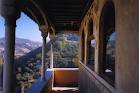
The bell is an important element of this tower. Its chime used to indicate the farmers of the Vega, the meadow of the valley, the hours when they had to water the fields at night. The bell started striking at 8 or 9.30 p. m. and it kept doing so at different intervals with different chimes until 3 or 4 a. m., depending on the season. This bell was also used to call the inhabitants of Granada in case of danger. Nowadays, it is only on January 2nd that the Watch Tower and its bell are in the minds of all the inhabitants of the city. That was the date when the Catholic Monarchs took the city and the tradition says that every young woman who is still single and who strikes the bell, will get married before the end of the year. 

The view from the top of the tower is marvellous, as it is possible to enjoy at the same time, the city of Granada, the Sierra Nevada, the Vega and the villages of the surroundi


The Alcazaba of the Alhambra

The Alcazaba

The Alcazaba, a fortress, is the oldest part of the Alhambra, as is the case of the Vermilion Towers (Torres Bermejas). It is thought that before it was built and before the Muslims arrived to Granada, there were already several constructions in the same area. The first historical reference to the existence of the Alcazaba dates from the 9th century and it is believed that it was then built by Sawwar ben Hamdun during the fights between Muslims and muwalladins [Christians who converted to the Islam and lived among the Muslims].

The current complex was built by Mohammed I, who constructed the ramparts around the previous castle, defences and three new towers: The Broken Tower (Torre Quebrada), the Keep (Torre del Homenaje) and the Watch Tower (Torre de la Vela). As a consequence, the Alcazaba became a real fortress, where the king established the royal residence. His son Mohammed II also had his residence in the Alcazaba, until the palaces were finished. From then on, the Alcazaba was only used as a fortress for military purposes.

When the Christians took the city, they carried out many works to repair the Alcazaba. At different moments of its history, during long periods of time, it was used as a State prison, even during the French occupation.

Like the Alhambra, the Alcazaba was abandoned and not cared for during a long time and it was not until the late 19th century and beginning of the 20th century that the restoration, exploration and plumbing works were started.


/ The Alhambra / History / Historical introduction

 Historical introduction, The Alhambra


The Alhambra was so called because of its reddish walls (in Arabic, («qa'lat al-Hamra'» means Red Castle). It is located on top of the hill al-Sabika, on the left bank of the river Darro, to the west of the city of Granada and in front of the neighbourhoods of the Albaicin and of the Alcazaba.

The Alhambra is located on a strategic point, with a view over the whole city and the meadow (la Vega), and this fact leads to believe that other buildings were already on that site before the Muslims arrived. The complex is surrounded by ramparts and has an irregular shape. It limits with the valley of the river Darro on its northern side, with the valley of al-Sabika on its southern side and with the street Cuesta del Rey Chico on the eastern side. The Cuesta del Rey Chico is also the border between the neighbourhood of the Albaicin and the gardens of the Generalife, located on top of the Hill of the Sun (Cerro del Sol).

The first historical documents known about the Alhambra date from the 9th century and they refer to Sawwar ben Hamdun who, in the year 889, had to seek refuge in the Alcazaba, a fortress, and had to repair it due to the civil fights that were destroying the Caliphate of Cordoba, to which Granada then belonged. This site subsequently started to be extended and populated, although not yet as much as it would be later on, because the Ziri kings established their residence on the hill of the Albaicin.

The castle of the Alhambra was added to the city's area within the ramparts in the 9th century, which implied that the castle became a military fortress with a view over the whole city. In spite of this, it was not until the arrival of the first king of the Nasrid dynasty, Mohammed ben Al-Hamar(Mohammed I, 1238-1273), in the 13th century, that the royal residence was established in the Alhambra. This event marked the beginning of the Alhambra's most glorious period.

First of all, the old part of the Alcazaba was reinforced and the Watch Tower (Torre de la Vela) and the Keep (Torre del Homenaje) were built. Water was canalised from the river Darro, warehouses and deposits were built and the palace and the ramparts were started. These two elements were carried on by Mohammed II (1273-1302) and Mohammed III (1302-1309), who apparently also built public baths and the Mosque (Mezquita), on the site of which the current Church of Saint Mary was later built.


Yusuf I (1333-1353) and Mohammed V (1353-1391) are responsible for most of the constructions of the Alhambra that we can still admire today. From the improvements of the Alcazaba and the palaces, to the Patio of the Lions (Patio de los Leones) and its annexed rooms, including the extension of the area within the ramparts, the Justice Gate (Puerta de la Justicia), the extension and decoration of the towers, the building of the Baths (Baños), the Comares Room (Cuarto de Comares) and the Hall of the Boat (Sala de la Barca). Hardly anything remains from what the later Nasrid Kings did.

From the time of the Catholic Monarchs until today we must underline that Charles V ordered the demolition of a part of the complex in order to build the palace which bears his name. We must also remember the construction of the Emperor's Chambers (habitaciones del Emperador) and the Queen's Dressing Room (Peinador de la Reina) and that from the 18th century the Alhambra was abandoned. During the French domination part of the fortress was blown up and it was not until the 19th century that the process of repairing, restoring and preserving the complex started and is still maintained nowadays.
                                                                    Next Monument===  Ver la alcalzaba=== Ver Generalife


The Mexuar


The Mexuar

Il est difficile de savoir comment le Mexuar fut originellement construit, puisque le grand nombre de restaurations et reconstructions qui ont été effectuées jusqu'à présent nous empêchent de savoir comment étaient les pièces, même celles qui ne sont pas des ruines aujourd'hui. Selon les citations du poète Ibn Zamrak, le Mexuar faisait partie des premiers alcazars Nasrides. Les réformes effectuées après l'occupation chrétienne et l'explosion en 1590 d'une poudrière qui a provoqué beaucoup de dégâts ont produit des modifications importantes dans sa distribution et sa communication, ce qui rend très difficile de savoir comment il était à l'origine. En fait, la seule partie qui reste de l'ensemble de pièces à côté de la tour de Muhammad I est le bâtiment principal, ce que nous appelons aujourd'hui le « Mexuar », qui fut aussi modifié par les reconstructions chrétiennes, et la galerie et la Tour de Machuca (Torre de Machuca), ainsi appelée parce que les architectes Pedro et Luis Machuca y habitaient pendant la construction du Palais de Charles Quint (Palacio de Carlos V). 

En tant qu'exemple de ce qui a été dit, la partie extérieure des murs de la salle du Mexuar ont subi tellement de modifications qu'il est impossible de savoir comment elle était à l'origine. Il y a quatre colonnes au milieu de la salle, avec des consoles de mocárabes (stalactites). Sur la plinthe en plâtre il est écrit : « Tout ce que vous possédez provient de Dieu ». Le toit, qui date de la période chrétienne, est un soffite avec décoration d'entrelacs. Le mur, sur sa partie supérieure, est décoré avec des plâtrières, des dorures et des peintures et les plinthes sont couvertes de carrelages d'azulejos et présente la devise de la famille des Alamares, le blason de Charles Quint et les armoiries de la famille des Mendozas, puisque monsieur Iñigo López de Mendoza, Comte de Tendilla, a été nommé Gardien par les Rois Catholiques. Il y a également des tableaux avec les colonnes d'Hercules et une bordure d'entrelacs mauresques du XVIe siècle. 

Au fond de la salle il y a une pièce qui était utilisée par le monarque pour réunir le conseil et donner audience. Lorsque le roi n'était pas dans le palais le Cadi (juge) était chargé de se réunir avec les négociateurs dans la salle suivante. Sur un azulejo de la porte il y a écrit : « Rentre et demande. N'aie pas peur de demande de la justice, car tu la trouveras ». Plus tard, près de 1632, ces salles furent transformé en chapelle chrétienne et un chœur a été construit.


Queen's Dressing Room (The Alhambra)

Queen's Dressing Room
The Queen's Dressing Room (Peinador de la Reina), also known as Boudoir (Tocador) or Mirador, was built around the year 1537 at the top of Abu l-Hayyay's Tower (Torre de Abu l-Hayyay) and it is so called because the Empress Isabel, Charles V's wife, lived there. On the tower's southern side there is a semicircular arch that leads to the Dressing Room, which was before an Arab lantern. On the rest of its sides there is a corridor open to the landscape. To the right of the entrance there is a sort of burner, formed by a marble flagstone with holes through which the perfume came out. The perfume was produced by spices that were burnt in a chimney downstairs and for this reason this tower was also called the «Tower of the Stove» (Torre de la Estufa). The fresco paintings are of interest, especially the ones representing Charles V's campaign to Tunisia in 1535. These show the squadron's departure from the port of Gagiliari, the journey, the manoeuvres, the withdrawal of the troops and their return to Sicily. Other paintings represent various scenes, from allegories of the Virtues to Phaeton's fable. They were probably made between 1539 and 1546.


Abu l-Hayyay's Tower (Torre de Abu l-Hayyay) was built on the walk by the ramparts and it has a view over the whole valley of the river Darro. The tower was decorated by Yusuf I and finished byMohammed V. It was part of the palace and had a defensive character. It was accessible from the covered walk by the ramparts underneath the Hall of the Ambassadors (Salón de los Embajadores). The wall used to reach the windowsill of the Dressing Room's balconies, but when it was destroyed in 1831, it was rebuilt to a lower height and a secret staircase was discovered. These stairs go through the lower part of the tower and lead to a clearing in the woods at the base of the tower.

The entrance to the tower has a carved wooden lintel, plaster voussiors above and a rectangle with stars in relief. Unfortunately, the inscriptions that existed around the door are not all preserved, but at least it is known (thanks to the fragments that remain) that they were praises to God and Mohammed V.
                                                                             NEXT MONUMENT=====>

                                                       Peinador


Patio of the Lions (Alhambra de Granada)


Patio of the Lions
The Patio of the Lions (Patio de los Leones) is probably the most famous place of the Alhambra. It is so called because of the twelve lions that throw jets of water and which are part of the fountain in the middle of the patio. The big dodecagon-shaped basin rests on top of these twelve lions that are around it. This white marble fountain is one of the most important examples of Muslim sculpture. Apoem by Ibn Zamrak was carved on the border of the basin. At the beginning of the 17th century another basin was added and is currently in the Garden of the Ramparts (Jardín de los Adarves), as well as the jet, which was done later, as indicated in the engraving.
                                                            
     Patio of the Lions


This patio was built by order of Mohammed V, its ground plan is rectangular and it is surrounded by a gallery in the style of a Christian cloister. It does not follow the typical Muslim Andalusian patio style, more like the Court of the Myrtles (Patio de los Arrayanes). The gallery is supported by 124 white marble columns with fine shafts, which are decorated on the exterior side with many rings and which support cubic capitals and big abacuses, decorated with inscriptions and stylised vegetal forms. Under the wood carving frieze there are plaster arches, except for those of the pavilions and the ends of the longer sides of the galleries, which are of mocarabes, with scallops decorated with rhombus-shaped carvings. At the middle of each of the two longer sides of the patio there is a semicircular arch bigger than the rest of the arches and with archivolts of mocarabes and scallops decorated with styled vegetal forms. These arches lead to the Hall of the Abencerrajes (Sala de los Abencerrajes) and with the Hall of the Two Sisters (Sala de Dos Hermanas). The chambers where the sultan's wives lived are over the arches. At the middle of each of the shorter sides there is a pavilion, built on part of the patio. The pavilions' ground plan is square and they are covered with semispherical domes with a wooden interior.

In the centre of the patio there was a low garden and the galleries' floor is made out of white marble. The garden went through many alterations over the years and it has now been eliminated in order to avoid the dampness it may cause. There are white marble channels, which start inside the pavilions and inside the halls of the two other sides and which get together at the central fountain forming a cross. On the ends of the channels there are jets that send water to the central fountain.