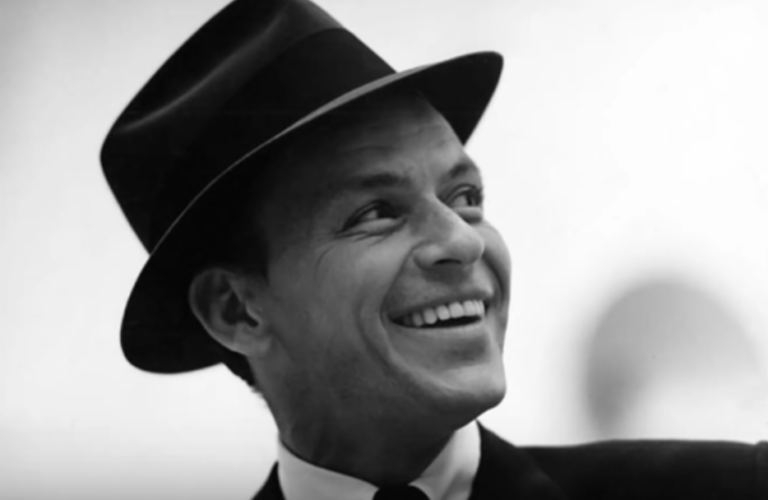
Mostrando entradas con la etiqueta Frank Sinatra. Mostrar todas las entradas

DON DE GENTES Sinatra y su criado


Según George Jacobs, el poder es lo que subyugaba a este jefazo de la música del siglo XX

George Jacobs habla con Frank Sinatra, de quien fue mayordomo más de una década.
Para contrarrestar el ensordecedor ruido de esta semana decidí refugiarme en la música. Muy aplicadamente, desde finales de 2015, ando celebrando el centenario de Sinatra en la intimidad de mi cuarto. Podría dedicarle este año completo, material no falta, de la inmensa biografía de James Kaplan, Sinatra, The Chairman, a otros libros curiosos de personajes secundarios que lo trataron y ofrecen una imagen iné­dita de este jefazo de la música del siglo pasado. Hay uno que me ha cautivado, Mr. S: My Life with Frank Sinatra, memorias escritas por George Jacobs, mayordomo del artista de 1953 al 1968. No se han publicado en España pero espero que algún editor se anime a traducir esta colección de jugosísimos recuerdos. Jacobs era un negro judío de Louisiana, que viajó por el mundo como cocinero en el Ejército y recaló en California, donde en un principio hizo pequeños papeles de negro selvático en películas de Tarzán. Sinatra lo contrató convirtiéndolo en asistente, chófer, confidente, cocinero. El mayordomo cuenta su vida con Mr. S y, a pesar de que este lo acabó echando de mala manera al publicarse unas fotos en las que Jacobs aparecía bailando con la todavía mujer del cantante Mia Farrow, prevalece la devoción que siempre sintió hacia un personaje que provoca de todo menos simpatía. Adoramos a Sinatra, nos gusta hasta cuando canta sobre unos arreglos melosos, amamos esa voz que aprendió a frasear las letras gracias a su maestra Billie Holliday, pero adentrarse en su vida es reconocer a un tipo al que no nos hubiera gustado tener como enemigo y que como amigo exigía una fidelidad entre absorbente y conflictiva.
El indudable encanto del libro no se reduce a lo que cuenta sino a cómo lo hace: en boca de otro podría ser un catálogo morboso de cotilleos. Pero el mayordomo tiene el arte de narrar y en estas páginas encontramos la crónica de aquellos días desde un punto de vista inédito: el del criado negro. Jacobs fue adiestrado por los padres del cantante en la cocina de los italoamericanos de New Jersey; lidió con el autoritarismo de Sinatra, con sus años de frustración y decadencia temprana, con la furia hacia el rey que lo destronó, Elvis Presley. Pero se enfrentó a la costosa tarea con el convencimiento de que su jefe era un genio. Tuvo que soportar, además, la fascinación que Mr. S (así lo llamaba Jacobs) sentía por la mafia y el poderoso padrino Sam Giancana, algo explicable en una estrella que nunca se desprendió de un profundo complejo social que si bien le llevó a esforzarse para que de su acento desapareciera todo rastro de su origen, le mantuvo fiel a los que fueron los héroes que poblaban los sueños del niño de Hoboken: los tipos duros. Jacobs, que muestra más finura que su jefe, se pregunta qué ve Sinatra en esos tipos peligrosos para tratarlos con tal veneración. El poder, concluye; era el poder lo que a Sinatra le subyugaba, y esa atracción fue la que le llevó a complacer hasta extremos humillantes al individuo más desagradable de esta historia, Joe Kennedy. Putero, inmoral, autoritario, racista, el patriarca de los Kennedy no se ahorraba una broma sobre los negros o los judíos delante del sufrido George. De manos del padre, llegó el hijo, John, al que Sinatra proveyó de putas y celebridades, entre ellas Marilyn Monroe, y para el que hizo campaña con la ilusión de convertirse en hombre de confianza del futuro presidente. Pero en cuanto JFK tocó la gloria, Sinatra fue eliminado de su círculo: entendió Robert Kennedy que la presencia del pendenciero cantante no favorecía a la imagen de su hermano.
La voz de Jacobs es la de un hombre que se siente afortunado por haber compartido aquel mundo ya extinto, aunque sin pretenderlo nos ofrece algunas páginas desoladoras. Seguramente, no era consciente al escribirlas. Todo lo que tiene que ver con las mujeres en la vida de Sinatra provoca desagrado: las putas compartidas, las actrices prestadas. Son muchas los mujeres célebres que pasaron por su cama, pero nos acongoja especialmente la pobre Marilyn, siempre manoseada, digna de compasión, entregándose al sexo para mendigar amor. Una Marilyn en la recta final, bajo el amparo de Sinatra, que actúa como un padrino: protector, follador samaritano, mujeriego compulsivo, frustrado siempre por no haber sabido domesticar a la indómita Ava Gardner. Ellas están en sus manos, en las de los integrantes del célebre Rat Pack, que se informan sobre la calidad de las mamadas y otras artes de las chicas. Sinatra, nos cuenta el mayordomo, llevó unos calzoncillos especiales en los Oscar para que no se apreciara la dimensión del paquete.
Sexo, whisky, ambición, traiciones. El hijo de Sinatra se pilló un buen rebote cuando leyó el libro, pero lo cierto es que las palabras del de Louisiana suenan a pura verdad.

Frank Sinatra, "LA VOZ"

Frank Sinatra 'loathed' Trump, singer's daughter Nancy tells MAGA supporter  | The Independent

De todas las superestrellas que ayudaron a dar forma y definen la cultura popular en el siglo XX, ninguna duró tanto tiempo en el punto de mira siendo tan enigmático como Francis Albert Sinatra.
 Remembering Frank Sinatra, the voice of a century

A lo largo de siete décadas, el flaco, chico de orejas grandes de Jersey  creció para ser el Presidente de la Junta influenciado generaciones de cantantes, músicos y fedora-rematados hepcats; triunfado en el escenario, en el cine (ganadora de un Oscar por su actuación en “De aquí a la eternidad y en  televisión.  Creó un personaje público tan indeleble que, incluso hoy en día,  es una figura de esmoquin, único en el escenario, bebida en una mano, micrófono en la otra, remolinos de humo como centro de atención. Su imagen, probablemente, rememora a millones de fans como el inolvidable hombre de “LA VOZ”

Frank Sinatra: leyenda de la música y de las polémicas

Frank Sinatra fue tan volátil y, profundamente, entrañable como  sibilino.


El chico con la voz aguda que salió de la garganta envuelta en la corbata de lazo flojo. Frank Sinatra fue y sigue siendo el artista más polémico, poderoso y sorprendente del espectáculo.  Él hombre de las damas legendarias  que dice haber  suspendido con las mujeres. No sabía nada de música y, sin embargo, hacía de ella un arte. Era  el cantante más fino de canciones populares y sorprendentemente buen actor,  director ambicioso, astuto hombre de negocios ...
Frank Sinatra, biografía de “la voz” - La Mente es Maravillosa
Frank Sinatra contribuyó  a ideas memorables con su técnica de canto. Para él era muy  importante el uso del micrófono en sus interpretaciones. Muchos cantantes nunca aprendieron a usarlo. El  micrófono era su instrumento  que tocaba el saxofón y el violín.


Sinatra murió en mayo de 1998 siendo el más apto y profético cantante por “LA VOZ”, su voz. 


.
Frank Sinatra is one of the most popular singers in American history. As an actor, he appeared in fifty-eight films and won an Academy Award for his role in From Here to Eternity. His career started in the 1930s and continued into the 1990s.

Early years

Francis Albert Sinatra was born in Hoboken, New Jersey, on December 12, 1915, the only child of Italian immigrants Martin and Natalie "Dolly" Sinatra. His father was a fire-fighter for the city of Hoboken and his mother was an amateur singer who often sang at social events. Sinatra lived in a mainly Italian American working-class neighborhood. His first experience with music came when his uncle gave him a ukulele, and on hot summer nights he loved to go outside and sing while playing the instrument. His other interest was boxing. To protect himself in the tough neighborhood he grew up in, he became a competent boxer. In high school he was a generous but pugnacious (likely to fight) individual—the traits he would carry with him throughout his life.
Early in his life Sinatra knew he wanted to become a singer. His influences were Rudy Vallee (1901–1986) and Bing Crosby (1903–1977). He dropped out of high school and began to sing at small clubs. He got his first

Frank Sinatra. 


.
big break on the radio talent show Major Bowes and his Amateur Hour in 1935, singing in a group called the Hoboken Four. At this time Sinatra sang in various New Jersey nightclubs, hoping to attract the attention of "Swing Era" bandleaders. In 1939, he began working on radio station WNEW in New York City with bandleader Harry James for $75 per week. That same year he married his longtime sweetheart, Nancy Barbato. They would eventually have three children.

The beginning of success

After seven months with Harry James, Sinatra joined Tommy Dorsey and his orchestra, causing his career to skyrocket. Dorsey's orchestra was one of the most popular in the land, and it remained so with Sinatra singing with it from 1940 through 1942.
During that time, Sinatra performed with the band in his first two movies— Las Vegas Nights (1941) and Ship Ahoy (1942). He began his solo career at the end of 1942 and continued his meteoric (speedy and brilliant) rise.

Fans

The Swing Era lasted from 1935 through the end of World War II (1939–45; a war fought between the Axis Powers—Italy, Japan, and Germany—and the Allies—France, Great Britain, the Soviet Union, and the United States). Sinatra was by far the Swing Era's best-known vocalist. His musical roots combined Tin Pan Alley (the song writing center of New York City) and Italian opera. Most important to him throughout his career would be his insistence on his own style and arrangements for whatever music he sang, thus producing his own unique phrasing of lyrics and melody lines.
Though Sinatra was exempted from military service in World War II because of a damaged eardrum, he helped the war effort with his appearances in movies and benefits for soldiers. He was also an outspoken supporter of Franklin D. Roosevelt (1882–1945) and liberal viewpoints, including racial and religious tolerance. He made many appearances to support charities.
Sinatra's wide-shouldered suits and his bow ties were imitated by many men, but his most ardent followers were teenaged girls, nicknamed "bobby-soxers" for the ankle-high socks they wore. His widespread appeal was further fueled by America's explosive mass media growth in newspapers, magazines, films, record players, and radio stations. Sinatra was the first singer to attract the kind of near hysteria that would later accompany live appearances by Elvis Presley (1935– 1977) and the Beatles.
This type of excitement reached its peak in the Columbus Day riot of October 12, 1944. Thousands of his fans (mostly female) were denied entry into the already-packed Paramount Theater in New York City. They stormed the streets and vented their frustration by smashing nearby shop windows.

The 1950s

There were rumors that Sinatra was connected to the Mafia (organized crime). These stories arose mostly from his socializing with alleged Mafia kingpins (chiefs). He also received bad publicity about his noted bar-room brawls (fights) with customers and reporters. The allegations of underworld activity were never proven, and no criminal charges were ever made.
In 1954 Sinatra appeared in the critically acclaimed film From Here to Eternity (1954). The role won him an Academy Award for best supporting actor. He appeared in nine films in just two years, including Guys and Dolls (1955), Young At Heart (1955), The Tender Trap (1955), The Man With the Golden Arm (1955), and High Society (1956). Sinatra was back on the record charts as well with "Young at Heart." Nelson Riddle became his musical arranger in the 1950s, and he helped Sinatra stay on the record charts throughout the rest of the decade. (In fact, Sinatra stayed on the charts steadily through 1967, in spite of rock and roll.) Sinatra did not just record singles. He recorded albums around a central theme with a large collection of songs or ballads. From 1957 through 1966 he had twenty-seven Top Ten albums without producing one Top Ten single.
Sinatra's bobby-soxer fans were now adults and Sinatra had shifted smoothly to the role of the aging romantic bachelor. This was signified by the image of him leaning alone against a lamppost with a raincoat slung over one shoulder.

The 1960s

Sinatra's hits in the 1960s included "It Was a Very Good Year" and "Strangers in the Night" (1966). He reached the top of the singles charts in a duet, "Somethin' Stupid," with his daughter Nancy in 1967.
Sinatra continued to act in several movies in the 1960s, including Ocean's 11 (1960), The Manchurian Candidate (1962), Robin and the Seven Hoods (1964), and Tony Rome (1967). Many critics felt several of these films had declined in artistic merit. Sinatra became known as part of a group of friends called the "Rat Pack." It included entertainers Dean Martin (1917–1995), Sammy Davis Jr. (1925–1990), Joey Bishop, and Peter Lawford.

"My Way"

After Sinatra's famous recording of "My Way" (1969), he made an ill-fated attempt to sing some of the lighter tunes of modern rock composers. This led to a brief retirement from entertainment (1971 through 1973). At this time he also shifted his politics from liberal to conservative. He had become a close friend of Ronald Reagan (1911–), helping him in his later successful presidential campaigns.
Sinatra's financial empire produced millions of dollars in earnings from investments in films, records, gambling casinos, real estate, missile parts, and general aviation. He came out of his retirement in 1974 with a renewed interest in older tunes. His return to the limelight was highlighted by his famous recording of "New York, New York" (1980) as he entered his sixth decade of entertaining.
In 1988 Sinatra, Sammy Davis Jr., and Dean Martin embarked on a cross-country tour. The tour lasted only one week. Sinatra later organized another reunion tour with Shirley MacLaine (1934–) in 1992 and it was an undeniable success.
By 1994 Sinatra was experiencing memory lapses, but that did not keep him from performing publicly. He merely added the use of a prompter (device that shows the words of a song) to remind him of the lyrics. After celebrating his eightieth birthday at a public tribute, new packages of recordings were released and became instant best-sellers. But Sinatra's health continued to deteriorate in the 1990s. On the evening of May 14, 1998, Sinatra died of a heart attack in Los Angeles, California.