Barcelona and Real Madrid put club rivalry to one side in memory of Johan Cruyff

Bacelona's President, Jordi Bartomeu (right), and Real Madrid's counterpart, Florentino Perez pay tribute 


  • Johan Cruyff died at the age of 68 on Thursday after battle with lung cancer
  • Dutch star rose to fame with Ajax before reaching new heights at Barcelona
  • Spanish club opened a memorial to Cruyff at the Camp Nou on Saturday 
  • Florentino Perez led a Real Madrid delegation to their rival's stadium 


It takes a lot to bring bitter enemies Real Madrid and Barcelona together; but Johan Cruyff was more than a lot. 'He was the game', as L'Equipe's cover ran.
President Florentino Perez led a Madrid delegation to the Cruyff memorial which opened at Camp Nou on Saturday morning, after the Dutch legend passed away from cancer on Thursday at 68.
'There are people who I think should never die, and one of those is Johan Cruyff,' explained Perez, having spent a minute in silence reflecting before a picture of Cruyff smiling warmly, holding a football.
Bacelona's President, Jordi Bartomeu (right), and Real Madrid's counterpart, Florentino Perez pay tribute 
Real Madrid's president delivers a speech in memory of Dutch football legend Johan Cruyff
The representatives of Barcelona and Real Madrid came together to remember one of football's greatest
'I knew him throughout his sporting life and some say he changed the history of Barcelona, I believe that he also changed the history of football, not just in Spain but around the world.
'My sentiments are with his family and all the Barcelona fans for their loss, but he is someone who will live forever.'Nobody could argue with Cruyff's legacy, or the impact he had on the game. His sad passing was something that had the power to draw people together to pay tribute; friends, enemies.
One of Cruyff's closest allies Joan Laporta was present, breaking down in tears before the memorial. He embraced his rival in the recent Barcelona presidential election, eventual victor Josep Maria Bartomeu, men who have their differences but both know their team wouldn't be what it is today without Cruyff. Not even close.
Perez (left), and Barcelona's counterpart, Jordi Bartomeu (right) put the club's rivalry to one side for the day
The memorial area centers around a large picture of Cruyff smiling warmly, holding an old fashioned football 
'We have to say goodbye to a very special and exceptional man. A man who revolutionized football,' said Laporta, echoing Bartomeu.
'We love him. We will always be grateful to him and we will keep him in our hearts forever. Cules [Barcelona fans] were privileged to have him.'
The president had said: 'It's impossible to understand today's football without him. He is and will always be a grand reference point for cules. These will be sad and painful days.'
Over 5,000 fans passed through the memorial area in the first three and a half hours it was open. There was a queue which lasted around 20 minutes, moving quickly but never dipping, with new supporters joining the end to replenish it. That became 15,158 people by the end of the day. 
The queue moved quickly but never dipped, with new supporters joining the end to keep replenishing  it 
Over 5,000 fans passed through the memorial area in the first three and a half hours it was open 
There was a queue with endless supporters lining up to pay their respects to the former Barcelona player
It will stay open until 7pm on Saturday, opening on Sunday and Monday between 10-7, eventually closing at 9pm on Tuesday night.
Flags at the Nou Camp flew half-mast, tossing in a gentle breeze as the sun tried to burn through the clouds, eventually succeeding, as people waited in line. The bouquets of flowers lying outside Gate 14 were illuminated.
There were offerings from many places, from Barcelona themselves, to the Catalan government, football clubs including Levante, where Cruyff played, albeit briefly, and Malaga, where he argued with police after being sent off when playing for Barcelona.
Petals scattered the floor while other bunches of flowers piled up alongside an array of candles, shirts and messages.
Children left a Chupa-Chups lollipop each; it was what he turned to sucking while managing Barcelona, after he was told he wasn't allowed to smoke any more.
A black ribbon is seen in the grandstands of Camp Nou stadium below the famous 'More than a club' moto
Flags at the Camp Nou flew half-mast, tossing in a gentle breeze as the sun tried to burn through the clouds
'Thanks for making football poetic,' read one tribute, written on a piece of card among the other offerings, where candles in holders with the No 14 etched into the sides burned gently.
It was one of many messages. Thousands of others were written in the 17 books of condolence available, open to sign before the entrance to the memorial.
It wasn't just Barcelona fans who turned up. As well as people wearing Ajax and Holland shirts, Cruyff's other sides, there was a blend of different colours in the mix. Athletic Bilbao. Leicester City.
In a more open area of the Nou Camp space, some children kicked a football around.
A fan, wearing a shirt of the Dutch national team, reflects in front of a sign reading 'thank you Johan'
A Barcelona supporter adds his own memento to the growing collection outside of the famous stadium
It was, as Bartomeu had said, 'a sad day', but that wasn't the only emotion. While some emerged crying from the memorial, other came out into the sunlight chatting, smiling, remembering some of the wondrous times Cruyff had brought to the club. As a player, then even more so as a manager.
Some of the younger ones didn't quite understand what was going on; Cruyff wasn't their hero. But without him, their own ones would not exist. Xavi, Andres Iniesta, Lionel Messi. That type of player and their type of game is valued thanks to Cruyff paving the way.
The passed penalty executed by Messi and finished by Luis Suarez against Celta Vigo in February brought back memories of Cruyff and Johan Neeskens. The Dutchman told of his excitement at seeing this Barcelona side try his old trick. Perhaps it was a tribute. The timing was fortunate.
Cruyff taught Barcelona how to win and how to do it in style. His disciple Pep Guardiola put it best. 'Cruyff painted the chapel,' he said. 'And Barcelona coaches since merely restore or improve it.'
President of the Catalan Government Carles Puigddemont speaks during the tribute to the late Dutch star
There were plenty of other recognisable figures. The president of Catalunya Carles Puigdemont, Carles Rexach, the father of Xavi Hernandez - with his son boarding a flight from Qatar to later pay his respects - all showed up. A delegation from local rivals Espanyol, led by head coach Constantin Galca, did too. More famous faces will follow suit in the days ahead.
Inside the stadium itself lay a giant banner, draped over the front rows of seats, with the symbol of a black ribbon. It is here, on the pitch, Barcelona have the opportunity to deliver the kind of tribute Cruyff would have wanted next Saturday.
Real Madrid will arrive for the Clasico, and, after a mosaic in honour of Cruyff and a minute's silence, battle lines will be drawn once again.

Millennials like socialism — until they get jobs

Emily Ekins
Emily Ekins, 

Millennials are the only age group in America in which a majority views socialism favorably. A national Reason-Rupe survey found that 53 percent of Americans under 30 have a favorable view of socialism compared with less than a third of those over 30. Moreover, Gallup has found that an astounding 69 percent of millennials say they'd be willing to vote for a "socialist" candidate for president — among their parents' generation, only a third would do so. Indeed, national polls and exit polls reveal that about 70 to 80 percent of young Democrats are casting their ballots for presidential candidate Bernie Sanders, who calls himself a "democratic socialist."


By Emily Ekins, The Washington Post For Blog of Juan Pardo

Yet millennials tend to reject the actual definition of socialism — government ownership of the means of production, or government running businesses. Only 32 percent of millennials favor "an economy managed by the government," while, similar to older generations, 64 percent prefer a free-market economy. And as millennials age and begin to earn more, their socialistic ideals seem to slip away.

So what does socialism actually mean to millennials? Scandinavia. Even though countries such as Denmark aren't socialist states (as the Danish prime minster has taken great pains to emphasize) and Denmark itself outranks the United States on a number of economic freedom measures such as less business regulation and lower corporate tax rates, young people like that country's expanded social welfare programs.

Coming of age during the Great Recession, millennials aren't sure whether free markets are sufficient to drive income mobility, and thus many are comfortable with government helping to provide for people's needs. Indeed, a Reason-Rupe study found that 69 percent of millennials favor a government guarantee for health insurance,  and 54 percent support a guarantee for a college education. Perhaps most striking is that millennials favor a bigger government that provides more services — 52 percent of them do, compared with 38 percent of the nation overall.

So, will it last? Are millennials ushering in a sea change of public opinion? Do they signal the transformation of the United States into a Scandinavian social democracy?

It depends. There is some evidence that this generation's views on activist government will stick. However, there is more reason to expect that support for their Scandinavian version of socialism may wither as they age, make more money and pay more in taxes.

The expanded social welfare state Sanders thinks the United States should adopt requires everyday people to pay considerably more in taxes. Yet millennials become averse to social welfare spending if they foot the bill. As they reach the threshold of earning $40,000 to $60,000 a year, the majority of millennials come to oppose income redistribution, including raising taxes to increase financial assistance to the poor.
Similarly, a Reason-Rupe poll found that while millennials still on their parents' health-insurance policies supported the idea of paying higher premiums to help cover the uninsured (57 percent), support flipped among millennials paying for their own health insurance, with 59 percent opposed to higher premiums.

When tax rates are not explicit, millennials say they'd prefer larger government offering more services (54 percent) to smaller government offering fewer services (43 percent). However, when larger government offering more services is described as requiring high taxes, support flips, and 57 percent of millennials opt for smaller government with fewer services and low taxes, while 41 percent prefer large government.

Millennials wouldn't be the first generation to flip-flop. In the 1980s, the same share (52 percent) of baby boomers also supported bigger government, and so did Generation Xers (53 percent) in the 1990s. Yet, both baby boomers and Gen Xers grew more skeptical of government over time and by about the same magnitude. Today, only 25 percent of boomers and 37 percent of Gen Xers continue to favor larger government.

Many conservatives bemoan millennials' increased comfort with the idea of "socialism." But conservatives aren't recognizing that in the 20th-century battle between free enterprise and socialism, free enterprise already won. In contrast with the 1960s and '70s, college students today are not debating whether we should adopt the Soviet or Maoist command-and-control regimes that devastated economies and killed millions. Instead, the debate today is about whether the social welfare model in Scandinavia (which is essentially a "beta-test," because it hasn't been around long) is sustainable and transferable.

Millennials like free markets, and most already accept that free markets have done more to lift the world out of poverty than any other system. Instead, what this generation has to decide is whether higher education and health-care innovation, access, and high quality can be best achieved through opening these sectors to more free-market reforms or though increased government control. This is a debate we should be glad to have

Europa: no antepongas la seguridad a la crisis de los refugiados tras los atentados de Bruselas

fotos3_4

Alianza por la Solidaridad lamenta profundamente los atentados que hoy han tenido lugar en el aeropuerto y metro de Bruselas y expresa su solidaridad con las víctimas y sus familiares. Asimismo, Alianza alerta del riesgo de que, pocos días después de la firma del “acuerdo de la vergüenza” entre la Unión Europea y Turquía en relación con la crisis humanitaria de los refugiados, estos terribles sucesos pongan en primer plano las políticas de seguridad dentro de la UE y se olvide la vulneración de derechos que suponen los términos de este acuerdo. Por ello, Alianza exige a los Estados miembro de la UE  y, en concreto, al Gobierno español que no primen esa seguridad por encima de la situación de las víctimas de esa crisis humanitaria.

Alianza considera que el acuerdo alcanzado a finales de la semana pasada vulnera derechos humanos fundamentales y recuerda la situación catastrófica en la que se encuentran millones de personas refugiadas de Siria y otras zonas en conflicto en los países limítrofes, en el propio territorio sirio, donde la guerra continúa, y dentro de Europa, adonde cada día llegan 2.000 personas huyendo de los lugares donde se encuentran los mismos radicales que atacan en la UE. Es inaceptable que se les denomine, en el mencionado acuerdo, “inmigrantes irregulares”.
Asimismo, es reprobable moralmente que decenas de miles de personas refugiadas vivan en condiciones inhumanas en Europa en pleno invierno y que se planteen cuotas voluntarias de acogida en los países, mientras no se impide que la xenofobia se extienda por el continente, azuzada por atentados como los de Bruselas. También lo es que se acuerde transferir la gestión de las fronteras europeas a terceros países, donde se generan bolsas de pobreza y violencia más peligrosas que la llegada de las personas que buscan protección en la UE.
fotos3_5
Para Alianza es fundamental que las organizaciones sociales y humanitarias tengan participación en la realización y control de los informes individualizados de las peticiones de asilo y refugio previstos en el acuerdo entre la UE y Turquía, habida cuenta de que muchas personas no pueden acreditar su situación. No tiene fundamento legal expulsar a quien traspasa una frontera en busca de protección, en aras de la seguridad, y dar prioridad a quienes no lo han intentado.
fotos3_2
Finalmente, exige que no se estigmatice a sectores de población y se busquen respuestas comunitarias dentro de la UE acordes con los valores y tratados firmados. Ni la contraprestación económica, ni las concesiones políticas pactadas con Turquía, ni la seguridad de las fronteras, ni la lucha antiterrorista pueden pasar por encima de los derechos humanos, que los 28 Estados miembros se han comprometido a respetar. Los retos globales no entienden de egoísmos nacionales sino de respuestas solidarias que refuercen los derechos de las personas y las soluciones

Turkish officials have accused European governments of attempting to export their Islamic extremist problem to Syria, saying the EU has failed to secure

Turkish officials have accused European governments of attempting to export their Islamic extremist problem to Syria, saying the EU has failed to secure its own borders or abide by pledges to share intelligence and cooperate in fighting the jihadist threat.

The failures were outlined by Turkish officials to the Guardian through several documented instances of foreign fighters leaving Europe while travelling on passports registered on Interpol watchlists, arriving from European airports with luggage containing weapons and ammunition, and being freed after being deported from Turkey despite warnings that they have links to foreign fighter networks.

“We were suspicious that the reason they want these people to come is because they don’t want them in their own countries,” a senior Turkish security official told the Guardian. “I think they were so lazy and so unprepared and they kept postponing looking into this until it became chronic.”

The conversations with Turkish officials took place before the latest Isis-claimed terror attacks in Brussels, but those bombings and the attacks in Paris last November brought into stark relief Europe’s failings in tackling the threat from Europeans intent on travelling to Syria or Iraq to fight with Isis and then returned to carry out atrocities at home.

Authorities in Belgium carried out a series of raids on Thursday and Friday connected with the Brussels attacks and an apparently separate, foiled plot in France.

Belgian police apprehend wounded suspect in Brussels attack raids on Friday

On Wednesday the Turkish president, Recep Tayyip Erdoğan, said Ibrahim el-Bakraoui, one of the bombers at Brussels Zaventem airport, had been detained in Gaziantep in June of last year over suspicions that he intended to travel to Syria as a foreign fighter. Though Belgian authorities were informed of his arrest, they told Turkey that they had no evidence that he had terrorism links and did not request his extradition. He was deported to the Netherlands before returning to Belgium.

Ankara had also warned French authorities about Omar Ismail Mostefai, whose name turned up in an investigation of a cell of French nationals suspected of terrorism links that ran from late 2014 to the summer of 2015, according to a senior Turkish official. Mostefai was one of the Isis militants who stormed the Bataclan concert hall in November last year.

European officials and the US-led coalition have repeatedly said Turkey ought to do more to secure its borders. Critics of Erdoğan accuse Ankara of turning a blind eye to the influx of foreign fighters, saying Turkey hoped to undermine the embattled Syrian strongman Bashar al-Assad. They point to the lack of hindrance encountered by Middle Eastern jihadis travelling through Turkey to Syria, who were prevalent along the established routes and made little effort at discretion on the way to the frontlines.

They also point to the fact that most of the thousands of foreign fighters battling in Syria today entered through Turkey. Vladimir Putin, after a Russian plane was shot down for straying briefly into Turkish airspace, accused Ankara of being “accomplices of terrorists”.

Law enforcement agencies ‘overwhelmed’
“The threat is unprecedented and intelligence and domestic law enforcement agencies appear to be overwhelmed by the numbers involved,” said Aaron Stein, a resident senior fellow at the Atlantic Council and author of a book on Turkish foreign policy. “In many ways, this explains their anger with Turkey. There is an expectation on the EU side that Turkey would put in place secondary measures to stop cross-border movement of people and material to Islamic State.

“Turkey has dramatically increased border security, beginning in March 2015,” he added. “However, before March 2015, there were legitimate concerns about the permissive environment along most of the Turkish-Syrian border.”

Brussels terror attacks: how events unfolded on Tuesday In interviews with the Guardian, Turkish officials challenged the assessment that they did not do enough to combat the terror threat, and provided details of several incidents they say show European governments allowed people to travel to Turkey.

In June 2014, Turkish security officers at Istanbul airport interviewed a Norwegian man who openly told them that he had come to Turkey in order to travel to Syria for “jihad”. Isis had just surged through Iraq, conquering the plains of Nineveh, and would soon announce a caliphate on its territories in Syria and Iraq, upending fragile nation states that had already begun to collapse.

When they searched his luggage, they found that he had managed to travel out of Oslo with a suitcase that contained a camouflage outfit, a first aid kit, knives, a gun magazine and parts of an AK-47, the contents of which had managed to elude customs authorities in Europe.

Two months later, a German man arrived in Istanbul with a suitcase containing a bulletproof vest, military camouflage and binoculars that he managed to carry through an airport in Paris on his way to Turkey.

In 2013, A Danish-Turkish dual citizen, Fatih Khan, left Denmark for Syria, but was detained while trying to cross the border in the Turkish province of Kilis and deported back to Copenhagen. He was given another passport by the Danish authorities, and made his way back to Syria.

That same year, Mohamed Haroon Saleem, a British citizen, arrived in Istanbul from London and travelled to Syria, having managed to travel out of the UK with a passport that was flagged on the Interpol list as stolen or lost.

Mohamed Mehdi Raouafi, a French citizen, left France in January of 2014 to join the war in Syria. Despite his sister warning the Turkish authorities who subsequently informed the French government that he was going there to join radical groups, he was allowed to travel out of France.

The Soufan Group, a respected security consultancy and thinktank, estimated in late 2015 that between 27,000 and 31,000 foreign fighters had travelled to Syria and Iraq to fight alongside militant groups, including 760 from the UK.

Turkey now has a list of more than 38,000 individuals who are banned from entry, based partly on more recent European cooperation and its own investigations into individuals arriving in the country. It has deported over 3,200.
Turkish officials said they approached European counterparts as early as late 2012 to come up with a pooled list of names of potential radicals who would not be allowed inside Turkey, saying they feared the aftermath of revolutions in the Arab world would lead to a vacuum of power that would allow the flourishing of groups such as al-Qaida inside Syria, but their proposal was declined by most intelligence agencies.

Despite efforts by the EU’s counter-terrorism coordinator, Gilles de Kerchove, most European countries were dithering in their response, sharing a limited list of names, and had no policy to specifically address the foreign fighter threat.

“They knew about these people, and they didn’t stop them because they had no legal framework to stop them,” the senior security official said.

Turkish counter-terrorism officials say they needed the lists of suspected radicals since they had no surveillance capability in Europe and had to rely on European intelligence agencies to alert them to potential terrorism suspects. Without European intelligence backing, they could only prosecute them for attempting to illegally cross into Syria and deport them back to Europe. Some of those deported were later given new passports and allowed to travel back to Turkey.

It is unclear why there was so little intelligence-sharing between EU states and Turkey. Turkish officials chalk it up to a multitude of factors: what they say is an attempt by Europe to export its terrorism problem to the battlefields in Syria rather than address rising Islamophobia and problems with integration; laws that limit European surveillance powers, and even a personal distrust of Erdoğan among European leaders due to his Islamist roots.

“Europe knew exactly what was happening, but they started a blame game and said the entire problem was on the Turkish-Syrian border,” the security official said.

“Without taking any responsibility they blamed us for this, on top of the refugee issue. They didn’t like Erdoğan and the Turkish government. Erdoğan was the symbol of political Islam, and so he is supporting Isis.”

The official added: “But where did Isis and Nusra come from? Al-Qaida in Iraq. Did Turkey have anything to do with the formation of AQI? Assad himself was responsible for the release of how many prisoners in 2011? And where are these people now? They are the ideologues of Isis in Raqqa and Tal Abyad.”

“Turkey didn’t create Isis, we probably should have controlled our border much better ... but Turkey’s mistake was actually to follow the lead of the Europeans and the US on Syria,” the official said.

On Friday an updated report published by the New America thinktank in Washington, studying a sample of 604 militants from 26 western countries who joined Isis or other jihadi groups in Syria or Iraq, found that one in seven was a woman, a significant shift from previous jihadi conflicts. The average age was 25 and, for female recruits, it was 22. Almost one-fifth of the sample were teenagers, of whom more than a third were female.


The report, co-authored by security analyst Peter Bergen, concluded that Europe is at greater risk than the US. “The threat to Europe is driven by the large numbers of Europeans who have travelled to fight in Syria and Iraq and who have returned to the west,” it said. “The threat to the United States from returning fighters is low and will likely be manageable. So far, no ‘returnee’ from Syria has committed an act of violence in the United States and only one returnee has been arrested for plotting a domestic attack.”

La mujer, que construyó la Torre de Donald Trump y no quiere que el empresario sea presidente

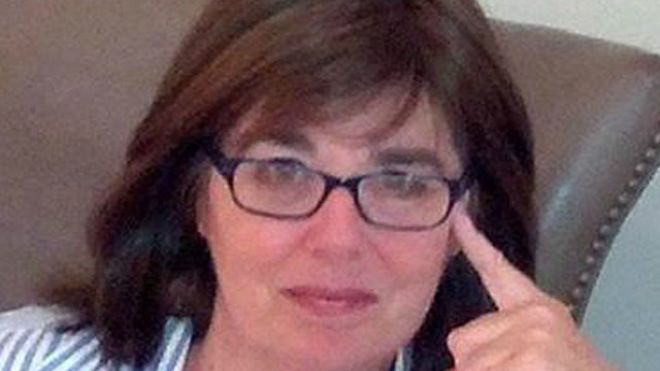
Barabara Res

Image copyright
Image captionBarbara Res trabajó con Donald Trump en la construcción de la famosa Torre Trump ubicada en la Quinta Avenida de Nueva York.
"Para mí las mujeres son muy importantes. Siempre lo han sido dentro de mis empresas y cuando nadie pensaba en ello, yo ubicaba a mujeres en posiciones importantes dentro de mi organización".
Eso es lo que ha repetido Donald Trump, el precandidato presidencial por el partido Republicano de Estados Unidos, en varios de sus discursos durante la campaña por las primarias en varias partes del país.
"Por ejemplo, en un tiempo en que nadie lo hacía, yo designé como vicepresidenta de la construcción de la Torre Trump en Nueva York a una mujer".
La mujer en cuestión es Barbara Tahan Res y, efectivamente, en 1979 era la persona al frente de la construcción del edificio emblemático del emporio inmobiliario del actual aspirante a la Casa Blanca.
TrumpImage copyright
Image captionTrump ha obtenido importantes victorias en su carrera por la presidencia de EE.UU.
Ahora ha salido a hablar del político en plena campaña: "Donald Trump no es tan malo como suena. Pero es un poco peor de lo que él se cree", le dijo Res a ll programa de radio Today de la BBC.
Res, quien trabajó como empleada de Trump durante 16 años, está siendo señalada como un símbolo de la equidad de género en la campaña del millonario estadounidense.
Y no es un tema menor de cara al futuro del país: Trump encabeza las primarias de su partido en cuanto al número de estados y delegados ganados.
"Él es un tipo inteligente y tuvimos muchas conversaciones sobre ese tema (de la igualdad de género) mientras trabajamos juntos", le dijo Resa la BBC.
Donald Trump Image copyright
Image captionDonald Trump lanzó su campaña a la presidencia a mediados de 2015.
"Me decía que tenía una teoría, que la mayoría de los hombres con los que trabajaba eran mejores que las mujeres pero igualmente creía que una mujer inteligente era más valiosa que diez hombres", agregó.

Abogada e ingeniera

Res nació en Nueva Jersey y se graduó de la Escuela de Ingeniería en 1972. Sin embargo, durante esos años no había mucho trabajo para una ingeniera mujer en Estados Unidos.
Participó en varios proyectos hasta que fue llamada a hacer parte de un importante: el hotel Hyatt en Nueva York, en 1976. Allí conoció a Donald Trump.
Pero fue en 1979 cuando unieron fuerzas para levantar la famosa Trump Tower de la Quinta Avenida neoyorquina.
"Creo que me eligió porque era un mujer, como él bien lo define, difícil, con instintos asesinos. Dura. Y creo que lo hizo porque él es un tipo duro a quien le gusta trabajar a tope", relató la ejecutiva.
"Me gustaba trabajar ahí, era un buen trabajo con una persona que era muy exigente, pero con la que yo tenía una relación muy buena", añadió.
TowerImage copyright
Image captionLa Torre Trump, ubicada en la Quinta Avenida de Nueva York, es el emblema del emporio del magnate.
A pesar de que la Trump Tower fue finalizada en 1983, Res continuó trabajando para Trump 13 años más, especializándose en la administración de su emporio.
Sin embargo, la relación con el magnate se derrumbó en 2013, cuando ella publicó un libro sobre sus experiencias laborales –titulado "Sola en el piso 68"-, muchas de las cuales señalaban al empresario.
"Pensé que le iba a gustar porque hablaba bien de él como jefe. Pero su reacción fue totalmente opuesta. Pasó a ignorarme cuando nos encontrábamos en eventos públicos", dijo Res.
"Y me enteré que hablaba mal de mí y de mi libro. La verdad es que hizo comentarios bastante violentos", añadió.
Pero aquella relación, que había sido el pilar y el eje de la construcción de uno de los edificios más reconocidos de Nueva York, pareció restablecerse cuando Trumpo comenzó su campaña en junio de 2015.
"Sin embargo, a pesar de que ha hablado de lo que hice, nunca me ha vuelto a llamar ni mucho menos me ha nombrado", dijo.
"La gente tiene que 'googlearme' para saber quién soy y qué he hecho".
MelaniaImage copyright
Image captionMelania Trump, la esposa del millonario, ha defendido las actuaciones de su marido.
Incluso con los vaivenes a lo largo de los años, Res considera que, desde su experiencia, Trump ha sido uno de los mejores jefes que se ha encontrado en su camino laboral.
"Todos los jefes que he tenido me han considerado por el tema del género. Y bajo esos parámetros, él ha sido el mejor", agregó.
Actualmente Trump lidera no solo las encuestas, sino también en números reales, los delegados para alcanzar la nominación como el candidato del partido Republicano para competir por la presidencia de EE.UU. en reemplazo de Barack Obama.
Hasta ahora tiene 460 delegados, mientras que su inmediato seguidor, Ted Cruz, ha conseguido 370.
Y es aquí donde surge la gran discrepancia de Res con su exjefe.
TrumpImage copyrightGetty
Image captionTrump ha sostenido que su negocio lo ha basado en el desarrollo inmobiliario.
"No creo que como persona ni como político Trump deba ser el próximo presidente de este país", explicó.
Actualmente Res es una abogada especializada en temas comerciales y tiene una visión particular sobre lo que ocurre en su país.
"En términos políticos una persona que propone cosas como prohibir la entrada de los musulmanes no puede ser presidente de Estados Unidos", afirmó.
"Pero en términos personales, creo que Trump no tiene la personalidad ni la paciencia que se requiere para manejar los asuntos de este país", concluyó.