Kaplan-Sweden's housing minister resigns amid 'extremist links' row

Mehmet Kaplan during a news conference in Stockholm on Monday Turkish-born Mehmet Kaplan denies wrongdoing and says he is stepping down due to public and media criticism
Sweden’s housing minister has resigned following a week of mounting controversy over his contacts with Islamic organisations and Turkish ultranationalists, piling further pressure on the country’s already unpopular minority coalition government.
The Social Democrat prime minister, Stefan Lofven, said Turkish-born Mehmet Kaplan, a member of the junior coalition partner Green party and former spokesman for Sweden’s Muslim Council, had submitted his resignation and that he had accepted it.
Sweden’s centre-left coalition of Social Democrats and Greens has been severely strained by Europe’s migration crisis, with the arrival of about 160,000 asylum seekers in the country last year forcing Stockholm to impose border controls and tighter rules in a U-turn on decades of generous refugee policies.
Kaplan, 44, denied any wrongdoing and said he was stepping down because public and media criticism was making it impossible for him to do his job. He said he opposed “all forms of extremism, whether nationalistic, religious or in any other form” and supported “human rights, democracy and dialogue”.
The minister, who was born in Turkey and arrived in Sweden at the age of eight, has come under increasing pressure after local media last week published photos of him at a dinner with Turkish ultranationalists, including the Swedish head of the extremist Grey Wolves organisation, and a former leader of the main Turkish nationalist group in Sweden, who was forced to resign earlier this month after calling on Turks to kill “the Armenian dogs”.
The minister was further attacked for his links to a number of Islamic organisations, including the international Millî Görüş movement, that some suspect of promoting religious fundamentalism. Kaplan has acknowledged the ties, but said they “don’t mean I agree with them on everything”.
The pressure increased at the weekend when Swedish media published seven-year-old footage of him comparing Israel’s policies towards Palestinians to the Nazis persecution of the Jews.
The Svenska Dagbladet daily quoted him as saying in March 2009, before he became a minister, that “Israelis treat Palestinians in a way that is very like that in which Jews were treated during Germany in the 1930s”.
The comments drew heavy criticism from Israel’s ambassador to Sweden, Isaac Bachman, who described them as “deeply antisemitic”, and Sweden’s foreign minister, Margot Wallström, who said they were “terrible”.
Kaplan conceded he had “on several occasions severely criticised the actions of the state of Israel”, but said he was “clearly not antisemitic”. Relations between Sweden and Israel have been poor since 2014, when the coalition government recognised the Palestinian state.

Rebranding the Czech Republic without consultation has only increased the estrangement between the people and the government

Czechia Czech Republic
Quite fittingly, the Guardian’s story on the Czech Republic’s attempt to rebrand itself as Czechia opened with a reference to the writer Franz Kafka. For when citizens of the country awoke on Friday morning, they found that things had changed. The announcement that the country’s name was to change came as much as a surprise to the citizens of the Czech Republic as to the rest of the world.
You would think such an important decision would be the result of a broad public debate (just think of the long and complicated process New Zealand went through trying to change its flag) – but this couldn’t be further from the truth.
In a poll conducted by the newspaper Mladá Fronta Dnes in 2013, 16,845 people said they didn’t like the new name, compared with 6,160 who did. The fact that officials think they can impose something like this shows how little respect they have for those that they govern.
But it’s an attitude the people of the Czech Republic will be all too familiar with. There has long been division about the country’s identity. Even the breakup of Czechoslovakia, although said to be peaceful, left many people on both sides feeling bitter. It happened without a referendum, which was demanded at the time in a petition signed by more than a million Czechs and Slovaks – a huge proportion of the countries’ combined population of 15 million. The breakup happened in an apparent breach of the Czechoslovak constitution and it was imposed without any mandate from the people. Both of the successor countries have since struggled with attempts to define their identity.
The Czech Republic consists of two lands: Bohemia and Moravia (and a little bit of Silesia, too). This results in further complications over our name as most of the Moravians feel that the geographic name describing the country should take this into account, and that “Czech lands” should be the proper geographic title of the country both in Czech and in English.
It is perhaps partly because of our past that people in the Czech Republic have accepted the news with a mood of slightly amused disbelief. There is a long tradition of the Czechs making fun of themselves. But behind this, even those in favour of the name change feel embarrassed by the way the government has once again bypassed the public in this decision. To make matters worse, the name change wasn’t even the result of some expert discussion. The only people they consulted were PRs, who felt the single word title would “sell the country better”. Despite this, on the day the idea was announced, even the head of the official Institute for the Czech language described the planned change as “forced through”.
The question of whether or not you are supposed to – at least in a democracy – have such a debate prior to a decision rather than after it will haunt the officials, and will add to a growing feeling of estrangement between mainstream politics and everyday life. Both from outside and inside the country it looks as if the Czech government does not have anything more important to deal with. But that’s not the case. We have a president who is the Czech equivalent of Nigel Farage. So how about addressing the issues of xenophobia and anti-EU feelings? How about tackling the fact that the police harass journalists and universities just for expressing a dissenting opinion?
A government not capable of facing up to these issues might well have thought that a small distraction – an unnecessary change in the country’s name perhaps – would be worth a little embarrassment. They might think differently about it now.

ABCC legislation rejected, giving Coalition double dissolution trigger – politics

Senate rejects Australian Building and Construction Commission legislation 34-36, giving government trigger to request governor general dissolve both houses of parliament – all the developments from Canberra

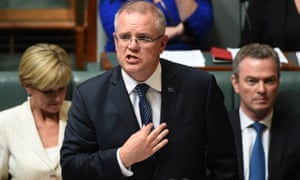
The treasurer, Scott Morrison, during question time on Monday. ‘Both major parties are muscling up this session.’

 The treasurer, Scott Morrison, during question time on Monday. ‘Both major parties are muscling up this session.

So long, farewell


Dilma Rousseff-Brazil's Workers party vows to hang on to power despite impeachment vote

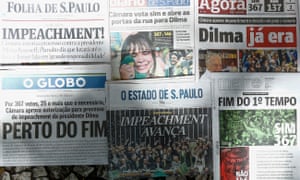
Brazilian newspapers report the news of the impeachment vote against President Dilma Rousseff on Monday.
Brazilian newspapers report the news of the imp Dilma eachment vote against President Dilma Rousseff on Monday. 
  • Lower house of congress voted to impeach President Dilma Rousseff
  • Ruling party calls on Brazilians to occupy streets as process passes to senate
Brazil’s ruling Workers party says it will fight to maintain power despite adevastating impeachment defeat for President Dilma Rousseff in the lower house.
While the opposition camp celebrated Sunday’s vote and prepared for a new administration under Vice-President Michel Temer, the government side said supporters should to prepare for the next stage of the impeachment process in the senate.
“The Workers party calls on all men and women committed to democracy to remain mobilised and occupy the streets against this fraudulent impeachment,” said Rui Falcão, the party’s national president.
Despite the fiery rhetoric, the momentum is overwhelmingly with the opposition, who are poised to give Brazil its first centre-right government in more than 13 years.
The house speaker, Eduardo Cunha – a conservative evangelical who has proved Rousseff’s nemesis – oversaw the passage of the impeachment motion comfortably with 367 votes, 25 more than the necessary two-thirds majority, prompting opposition politicians, many of them draped in the national flag, to burst into the football chant “Eu Sou Brasileiro” (I am Brazilian).
The process now goes to the senate, where only a simple majority is needed to begin deliberations that would force the president to step aside for 180 days until a final verdict is reached.
Polls suggest more than 60% of the public favour the removal of Rousseff, who was once one of the world’s most popular leaders but now suffers approval ratings of just 10% as a result of a dire economic recession, political tumult and the Lava Jato corruption investigation into kickbacks from the state-oil company, Petrobras. Politicians from almost all of the major parties have been implicated, including several senior members of the Workers party.
The president and vice-president have yet to react publicly to the vote – a sign that they are still processing the seismic political shift now under way.
But Temer’s supporters in his Brazilian Democratic Movement party (PMDB) are already anticipating the change ahead.
Moreira Franco, a senior party member, noted on Twitter that Brazil now had a good opportunity for political and economic reform, but he urged the opposition not to become complacent. “We need to maintain a national mobilisation so that the senate hears the noise on the streets,” he tweeted.
Many challenges lie ahead. The vice-president has promised a sound fiscal policy, but this would mean sharp austerity cuts in the midst of an already dire recession. Many of his supporters – especially those up for re-election later this year – will be urging him to maintain public spending.
The bank system, which is staggering under a mountain of non-performing loans, is another major risk that he must handle carefully. Many of these questions relate to how far to the right Temer is willing to move. One indication will be whether he appoints Jair Bolsonaro – a supporter of the former military dictatorship – to his cabinet.

A key question in this regard will be the fate of Cunha – who is at the centre of both the Lava Jato probe and the impeachment drive. His supporters are demanding that Temer kill an ethics committee investigation of the house speaker as a reward for pushing through the impeachment vote.There is also the constant threat posed to politicians of almost all stripes by the Lava Jato investigation. Until now, the opposition has used revelations of corruption to tarnish the government. But many of them are also threatened by accusations of bribery and money laundering. Many would clearly like Temer to weaken the independence of the prosecutors and federal police, which he could do by appointing a sympathetic justice minister, but this would be extremely unpopular with the public, who have come to put more faith in the judiciary than their elected representatives. 

Given the many problems that Brazil faces, Workers party politicians feel they can regain the initiative with a little time out of office. 
Lindberg Farias, a Workers party senator from Rio de Janeiro, said it will be difficult to block the first vote in the senate, but there is a chance with the second vote, which needs a two-thirds majority and will take place up to six months after the first. 
He expects the senate leader, Renan Calheiros, to drag the process on for as long as possible because he is a rival of Temer’s within the PMDB. The longer it goes on, the more chance he believes the left has of a recovery.
“The public don’t like Temer and Cunha. I think within two months of their administration, opinion will shift against them and people will move to protect Rousseff,” Farias said. 
After last night’s crushing defeat, this sounds like wishful thinking. But moods can change quickly. As Rousseff has learned to her cost, public opinion and political loyalties in Brazil are as solid as quicksand.

Problema Immigrazione, da Berlino no agli eurobond. Renzi: "Se Merkel ha altre soluzioni lo dica".


Juncker "molto contento" del "migration compact" proposto dal premier, mentre la Germania invita a pensare ad "altre misure". Come la tassa sulla benzina avanzata dal ministro Schaeuble. Consiglio Ue dei ministri degli Esteri a Lussemburgo. Gentiloni: "Interesse per la nostra proposta. E sono altri gli eurobond che non piacciono ai tedeschi"
"L'Ue deve farsi carico del tema, noi abbiamo proposto gli eurobond, bene Juncker. Se la Merkel e i tedeschi hanno soluzioni diverse ce le dicano, non siamo affezionati a una soluzione. Ma sia chiaro che il problema lo deve risolvere l'Ue tutta insieme. L'Italia è tornata dalla parte di chi propone soluzioni non di chi urla". Così Matteo Renzi in un intervista al Tg1, che segue la buona accoglienza ricevuta in seno alla Commissione europea dalla proposta italiana sui migranti, ma anche il "no grazie" dalla Germania sulla misura degli eurobond per finanziare investimenti nelle infrastrutture dei Paesi africani di origine e transito dei migranti.

La mancanza del consenso tedesco complica evidentemente il passaggio comunitario del "migration compact", il pacchetto di misure proposto da Roma. Per il governo tedesco, non esiste "alcuna base per un finanziamento comune dei debiti per le spese sostenute dagli Stati membri per la migrazione" fa sapere il portavoce Steffen Seibert, ricordando che vi sono altri strumenti disponibili nel bilancio europeo. Il governo tedesco, assicura Seibert, "esaminerà in modo approfondito" le proposte di Renzi, ma la Germania resta "per una soluzione complessiva europea", che tenga in considerazione anche la rotta del Mediterraneo. "È importante che noi pensiamo anche ad altre misure". Tra "le altre misure", Berlino inserisce una sua proposta riguardante gli strumenti finanziari per affrontare la crisi dei migranti: una tassa sulla benzina, di cui il ministro tedesco delle Finanze "Wolfgang Schaeuble ha già discusso col presidente Jean Claude Juncker". riferiscono fonti Ue.

Il peso della posizione tedesca induce alla cautela anche la Commissione Ue sull'utilizzo degli eurobond. La portavoce Margaritis Schinas fa sapere che su quella precisa misura "sono state formulate anche altre proposte. Non posso dare, in questa fase, una posizione della Commissione Ue". Per contro, la stessa portavoce esprime come "il presidente della Commissione Jean Claude Juncker" sia "molto contento" del "migration compact" promosso dal premier italiano, "lavoreremo a stretto contatto con Matteo Renzi". Mentre il presidente del Consiglio europeo Donald Tusk manifesta il suo apprezzamento per l'iniziativa italiana con un tweet.


In una lettera aperta indirizzata venerdì 15 aprile a Juncker e a Tusk, Renzi aveva formulato le sue richieste ai vertici dell'Unione. Tra i punti, un impegno finanziario forte a livello europeo per fronteggiare l'emergenza immigrazione; un impegno da concretizzarsi anche attraverso gli eurobond. Nella proposta vengono delineati i "migration bond", l'emissione di bond comuni per l'immigrazione.

LEGGI Eurobond e investimenti verso i paesi africani: così si ferma la nuova ondata

I ministri degli Esteri dell'Unione si incontrano oggi in Lussemburgo per discutere di immigrazione, proprio nel giorno in cui si registra l'ennesima tragedia nel mar Mediterraneo: il Consiglio dell'Ue, presieduto dall'alto rappresentante per la politica estera e di sicurezza comune Federica Mogherini, è anche la prima occasione di discussione della proposta italiana per i 28 Stati membri. Facendo il punto dei lavori, Mogherini dichiara che le proposte italiane "nel Consiglio esteri sono state ben accolte. Molti elementi supportano lavori e attività che già facciamo. Pensiamo che costituisca un positivo contributo politico per mantenere il focus sul lavoro e aumentare l'impegno combinato di istituzioni e Stati membri".

Da Lussemburgo, il ministro degli Esteri Paolo Gentiloni ritiene che "nei commenti (negativi) del portavoce della Cancelliera ci sia una sovrapposizione di due questioni diverse: gli eurobond in generale", a cui la Germania è sempre stata contraria, "e questa nuova proposta italiana che invece mi sembra sia guardata con attenzione dal governo tedesco". Parlando con la stampa a margine del Consiglio esteri dell'Ue, Gentiloni afferma di credere che la contrarietà tedesca "si riferisca a un altro tipo di eurobond, per essere sinceri".

Il titolare della Farnesina si è mostrato piuttosto soddisfatto di come si è svolta la discussione sulla proposta italiana durante il Consiglio e per le reazioni positive non solo della Commissione ma anche "di diversi Paesi attorno al tavolo dei ministri degli Esteri". "In generale - aggiunge Gentiloni - la discussione sottolinea l'importanza di considerare la rotta del Mediterraneo centrale come l'assoluta priorità, non perché sia in atto un'invasione, ma perché, dopo che si è riusciti a ridurre i flussi nella rotta balcanica, bisogna prevenire deviazioni di rotta in questa direzione".

¿Qué es la política?

No debe impregnarlo todo, como quiere el populismo. Ni tampoco tiene que evaporarse, como propone la tecnocracia. Es lo que está en medio, entre el sistema y el individuo. La gestión de las reglas comunes y no de los nombres propios

Cuando todos los integrantes de un ecosistema están despistados suele deberse a que falla algo básico. Como el aire o el agua. Algo tan primordial que lo damos por descontado. Y, en nuestro caso, creo que lo que nos falla es una definición compartida de política. Los españoles no nos ponemos de acuerdo sobre qué es la política. Y, si no sabemos qué es, no podemos mejorarla.
No es que carezcamos de definiciones teóricas. Tenemos muchas reflexiones escritas sobre el sentido de la política. Lo que nos falta es una definición operacional que nos permita navegar en un contexto socioeconómico crecientemente complejo e impredecible. Hasta hace poco vivíamos en un mundo con muchos riesgos. Por ejemplo, no sabíamos si tendríamos un año de vacas gordas o de vacas flacas. Y, en ese contexto, era relativamente fácil ponerse de acuerdo en cuál es el ámbito de la política. En realidad, se trataba de continuar con la lógica anticipada ya en la Biblia: guardar en los años de vacas gordas en previsión de los años de vacas flacas. Pero ahora vivimos en una realidad con muchas incertidumbres, que son más amenazantes que los riesgos. No sabemos si nos aguarda un año de vacas o de patos. O de cisnes negros. La labor de la política no está tan clara. Las fronteras entre lo que nos concierne a todos y lo que concierne sólo a los individuos son más difusas que nunca.
Así, en España se han consolidado dos visiones antagónicas de la política que, una por defecto y otra por exceso, dificultan la comunicación entre los adversarios políticos. Y polarizan el país hacia dos tentaciones igualmente peligrosas: el populismo, para quienes la política debe impregnarlo todo, y la tecnocracia, para quienes la política debe evaporarse y dejar paso a los expertos.
Unos, sobre todo idealistas de izquierdas, piensan que “todo es política”. Su objetivo es “conquistar espacios para la política”, arrebatándoselos a los mercados. Cuantos más aspectos abarque la política, más justa será una sociedad, pues política es sinónimo de justicia. De forma que, cada conflicto aislado (de los retrasos de los trenes y los accidentes de tráfico en autopistas de peaje a las cuentas offshore en paraísos fiscales), cualquier molino de viento, se convierte en una excusa para emprender una quijotesca batalla contra los gigantes mercados. Los problemas son sistémicos. Los casos de corrupción no son hechos aislados o contingentes a unas instituciones determinadas, sino el resultado de un sistema corrupto. Esta actitud es la antesala de populismo, el “poscapitalismo” o cualquier otro “ismo” que nos salvará de este valle de lágrimas.
Los papeles de Panamá se analizan como casos morales o se acusa a los paraísos fiscales
Los otros, fundamentalmente realistas de derechas, achican tanto la definición de política que la reducen a su factor humano. La política son los políticos. Si hay corrupción es porque hay políticos deshonestos. En toda cesta habrá algunas manzanas podridas. Se quitan y ya está. La política consiste en sustituir a los individuos (o partidos) malos por los buenos. Luego, los más conservadores propondrán oposiciones hasta para el cargo de ministro y los más aperturistas mecanismos de selección propios de una start-up,pero con el mismo sustrato de fondo: el gobierno de los mejores.
Pero la buena política no es ni una cosa ni la otra: ni cuestionar el “sistema” en general ni a unas personas en particular. La política es lo que está en medio, entre el sistema y el individuo. La política es la discusión sobre las normas formales, las instituciones, que regulan el comportamiento de los miembros de una comunidad. Las sociedades que circunscriben el ámbito de la política a este terreno intermedio tienen más posibilidades de superar los problemas colectivos que aquellas, como la española, donde no existe un consenso mínimo sobre cuál es la esfera de actuación de la política.
La cuestión es intentar saber qué normas y protocolos han propiciado la evasión de impuestos
Veámoslo con la discusión en torno a los papeles de Panamá. En España predominan dos visiones. Por un lado, se discuten hasta la saciedad los casos individuales. De forma justificada o no, hemos hecho juicios mediáticos a numerosas personalidades con relevancia política. La asunción de fondo es que se trata de un problema de moralidad individual: hay buena gente, que paga sus impuestos, y mala gente (o una mala tribu político-empresarial), que crea sociedades offshore para evadirlos. Y, por el otro, abundan las grandes reflexiones sobre el sistema económico global y la imperiosa necesidad de coordinar una acción internacional contra los paraísos fiscales. Aquí la asunción de fondo es que falla el sistema capitalista o la globalización en su conjunto. La sed de sangre de unos y otros es saciada: sabemos que hay unos individuos (y algún partido político) pérfidos o un sistema global perverso. Pero, como es fácil de imaginar, ni de una visión ni de la otra salen prescripciones útiles.
Al contrario, en otros países europeos la discusión transcurre más en el ámbito propio de actuación de la política, sin caer en los casos individuales y, a la vez, sin elevarse a las nubes abstractas del sistema. Obviamente, también se ha hablado de personas particulares y se ha especulado sobre la globalización económica, pero periodistas y analistas han puesto el foco sobre las reglas impersonales que han permitido la fuga de capitales a paraísos fiscales. La asunción de fondo es que el problema no es individual ni sistémico, sino institucional. ¿Qué normas y protocolos de actuación de las instituciones públicas, pero también de las privadas como los bancos, han propiciado la evasión de impuestos? Y, en consecuencia ¿qué cambios normativos habría que introducir para revertir esta situación? En estos países se habla más de, y con, representantes de bancos y de reguladores públicos que de evasores concretos. Más de las instituciones que han fomentado el pecado que de los pecadores.
Algo similar ocurre con muchos otros debates políticos, como, por ejemplo, la lucha contra la corrupción. Nos obsesionamos con los casos particulares (de personas o partidos) o nos dejamos arrastrar en meditaciones vagas sobre el sistema. Olvidando que la política es la gestión de las reglas comunes y no de los nombres propios.