Comentando una forma de vivir creativa y pasional, la textura es de rabia y emotividad, hay desesperación y un poco de ansiedad. ¡¡BASTA YA¡¡.
Juan Pardo Navarro
Security officers patrol a street in Manta, Ecuador. The damage from the quake could be as high as $3bn.
The death toll from last week’s earthquake in Ecuador has risen to 646, the president, Rafael Correa, has said.
The 7.8 magnitude quake, Ecuador’s worst in nearly seven decades, injured about 12,500 people and left 130 missing along the country’s ravaged Pacific coast.
“These have been sad days for the homeland,” said a visibly moved Correa during his regular Saturday TV broadcast. “The country is in crisis.”
There have been several strong tremors and more than 700 aftershocks since the quake, causing panic but little additional damage. Tremors are expected to continue for several weeks.
With nearly 7,000 buildings destroyed, more than 26,000 people are living in shelters. About 14,000 security personnel are keeping order in the affected areas, where only sporadic looting has been reported.
Survivors in the quake zone have been receiving food, water and medicine from the government and scores of foreign aid workers, but Correa has acknowledged that the poor condition of roads delayed the arrival of aid to some communities.
Correa’s leftwing government, which is facing a huge rebuilding task at a time of greatly reduced oil revenues, has said it will temporarily increase some taxes, offer assets for sale and possibly issue bonds abroad to fund reconstruction. Congress will begin debate on the tax proposal on Tuesday.
The president has estimated the damage at between $2bn and $3bn. Diminished oil revenues have already left the Opec member country of nearly 16 million people facing near-zero growth and lower investment.
On Saturday, Ecuador’s private banking association said its member banks would defer payments on credit cards, loans and mortgages for clients in the quake zone for three months in order to assist reconstruction efforts.
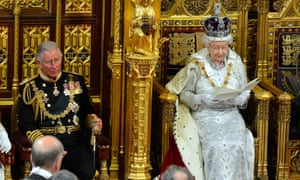
he Queen is scheduled to take a short walk from Windsor Castle tomorrow, meeting the public and unveiling a plaque as she celebrates her 90th birthday. Such events are carefully orchestrated, evoking the history of the institution she represents, so it is unfortunate that her stroll will begin at the Henry VIII gate, named after a notorious uxoricide and probable psychopath.
Elizabeth II is not a direct descendant of her monstrous predecessor and the modern monarchy is very different from its Tudor counterpart. After more than six decades on the throne, the Queen has come to occupy a special role in the national psyche, if such a thing exists. She has come to represent continuity at a moment when the world seems more dangerous than ever.
These days she is a grandmotherly figure, and it is regarded as churlish to ask questions about how she has conducted herself as head of state. I am a republican, and I don’t believe in the monarchy but if you strip away the stardust, as royalists like to call it, it is hard to see her reign as a resounding success even on its own terms. Her personal popularity has fluctuated wildly: in the autumn of 1997, after the death of Princess Diana, the Daily Mail published a memorable front page, demanding: Time for the Queen to go? At that low point, an opinion poll suggested that “seven in 10 Britons” wanted her to consider abdicating.
The monarchy’s foundations are less secure than is often assumed, which is why royalists should be worried that the Queen will leave behind an institution as unreformed as it is undemocratic. There is a chasm between the UK’s constitutional arrangements and its commitment to equality: viewed from abroad, the royals are a strange bunch of people with little connection to the diverse country the family is supposed to represent on the world stage. Its inextricable connection to the archaic principle of primogeniture means that the next three heads of state will be stolidly monocultural: white, male and Anglican.
More to the point, the royal family has entrenched its position in a way that flies in the face of the dramatic changes other elements of the establishment have had to cope with in recent years. As elected politicians learn to exist in a much more open and critical society – the prime minister, chancellor and leader of the opposition have just published details of their tax affairs – the Queen and her immediate relatives are less open than ever to democratic scrutiny.
Senior royals now enjoy total exemption from the Freedom of Information Act. Press releases crowing about how little the monarchy costs leave out the huge cost of security, even though taxpayers fund it. The office of an elected head of state would be cheaper to run – it is preposterous that there are something like 18 “working” royals on the public payroll. But that isn’t even the most significant objection to the monarchy’s opaque finances. The royals’ habitual secrecy makes a mockery of the accountability we expect of people who receive public money.
Their exemption from freedom of information requests came about because they had a moment of staring into the abyss, caused by the Guardian’s attempt to see some of the “black spider” memos from the Prince of Wales to politicians. The fact that he privately bombarded ministers with wheedling letters, contrary to his constitutional position, was an open secret but the government fought to keep the details under wraps. Understandably, because the man they eventually revealed is a nightmare: credulous, reactionary and gripped by the illusion that he is a radical thinker. In 2004 he wrote to the then education secretary, fishing for public funds for one of his pet projects that would challenge “fashionable” ideas about education. “Perhaps I am now too dangerous to associate with!” he boasted.
Dangerous, yes, but not in the way he intended. From a variety of sources, we know that Prince Charles has character flaws that imperil the future of the entire operation. For the second time in less than a century, the throne is about to pass to someone entirely unsuited to it. If you are a monarchist, this is surely one of the Queen’s greatest failures: she was in charge of the prince’s education and upbringing, yet she has been singularly ineffectual as a brake on his excesses.
What makes this so astonishing is that the Queen has more reason than anyone to be aware of the historical precedent. She was nine in 1936 when her uncle David, another manifestly unsuitable Prince of Wales, succeeded his father George V and lasted less than a year as Edward VIII. That near-disaster for the monarchy has always cheered republicans, and the parallels between then and now are striking.
Edward was in his early 40s when he inherited the throne but Charles is approaching 70 and likely to be a king in a hurry. He has let it be known that he does not intend to stop making what he calls “heartfelt interventions” – otherwise known as unconstitutional political interference – in national life. For republicans, the prospect of this foolish, not-very-bright man ascending the throne is a dream come true. The present Queen’s legacy may look very different once the future of the monarchy is in the inept hands of her eldest son.
ust over four years ago, my GP gave me unwelcome news: I had type 2 diabetes. I was shocked. I didn’t match the stereotypical patient profile of an overweight couch potato. Aged 59, I was thin, fit and 5ft 7in tall, drank frugally, went running every week and weighed just 10st 7lb. The outlook was not good, with the risk of heart attacks, strokes, blindness, amputations and a 36% greater chance of dying early. I thought, this can’t be happening to me; there has to be a way through. I started trawling the web for information and unearthed a report about a research trial at Newcastle University, led by Professor Roy Taylor.
The results suggested you could reverse type 2 with a daily 800-calorie diet for eight weeks, depending on how quickly and how much weight you need to lose. Taylor’s team discovered that type 2 is caused by fat clogging up the pancreas, preventing it from producing sufficient insulin to control blood sugar level. They calculated you need to reduce your pre-diagnosis body weight by a sixth to starve your body into using up the rogue fat lodged in your pancreas and allow it to function normally. “The body does not like any fat lying around in the pancreas, so it consumes that first,” says Taylor. The daily 800-calorie diet comprises either three 200g liquid food supplements of soups and shakes, and 200g of non-starchy vegetables or the tastier 800g equivalent of calorie-shy meals you measure out yourself, plus 2-3 litres of water.
It sounded tough, but what could I lose? I chose the supplement route. It was like a leap in the dark – I’d always loved my food. After giving in to a normal meal after taking my first supplement, I began in earnest the next day. I would accustom my mind to what was on offer and look forward to the next meal, savour what I ate and enjoy it for what it was. I blanked off thoughts of favourite meals and began to take each day as it came. And I followed Taylor’s advice on drinking water to stave off hunger, which was rarely a problem – my body just seemed to get used to it.
Around day six, my glucose was 4.1, the lowest yet. The next day I treated myself to a chocolate shake to celebrate. Two months later, my doctor declared the diabetes had resolved itself. My glucose level was 5.1mmol/l, well below the diabetes mark of 6. I was free of it, but I now had another equally important task – maintaining my new body weight. How much should I eat? “About two-thirds of what you were used to before the diet,” says Taylor.
Which is what I’ve been aiming for – and achieving – ever since. I weigh 8st 6lb, go running on average three times a week, attend a gym, eat healthily and burn around 1,750 calories a day. I am not diabetic any more.
The research I followed is now the subject of a bestselling diet book, The 8-Week Blood Sugar Diet by Dr Michael Mosley. Publication could not be more timely, given a WHO report last month reporting that 422 million adults now have diabetes, four times that of 1980.
So, nearly four years down the line, is my diet still successful? Yes – but it takes close monitoring and willpower. We all know that diets are notoriously hard to stick to – unless the incentive is powerful enough. In my case, it is.
What keeps me religiously counting calories on supermarket labels, running in all weathers and reducing the amount I eat and drink (and sadly I do mean alcohol) is knowing that my health could otherwise be seriously at risk. In fact, diet and exercise have left me much healthier, with lower blood pressure, fewer aches and pains, and a more active, alert mind. As well as eating healthily I aim for three 30-minute runs, two visits to the gym including weights (I build up forearm muscles that soak up excess energy before it gets stored as fat) and 15-minute sessions of interval bike training, plus press-ups, sit-ups and the plank (an exercise to help lose excess fat round the stomach).
It sounds tougher than it really is – I’ve learned to enjoy my shift in lifestyle, and I like a whole range of food I didn’t know about before. I positively look forward to my muesli, I can cook stews, grill meat, appreciate all types of fish. Treats are allowed; just compensate by eating frugally in the days after – particularly at Christmas – to balance up your calorie count.
Exercise is basically survival – I can’t afford to take in calories without shedding them as well. It does take effort but I feel so much better afterwards. Regardless of one’s situation, tenacity, focus and single-mindedness are key to reversing type 2 diabetes. Without support, many people will fail to stick to the diet and a change in lifestyle. One of the burning questions being researched now is whether our doctors and nurses can deliver that support and if so, how?
FacebookTwitterPinterest
‘I positively look forward to my muesli.’ Photograph: Alamy
How to lower your blood sugar level: Richard’s 800-calorie daily diet four years ago…
Breakfast Double choc, choc mint, banana or wild cherry food supplement shake (powder mixed with water).
Lunch Chicken and vegetable or curry-flavoured soup.
Supper Home-made pea/carrot/onion soup or roasted non-starchy vegetables, vanilla shake (my favourite – it tasted like ice-cream).
Plus 2-3 litres intake of water/herbal tea daily. Strictly no treats, alcohol, pasta, rice or potatoes.
…and the 1,750-calorie diet he follows now
Breakfast Home-made muesli – uncooked porridge oats mixed with sultanas, blueberries, plums or other berries. Plus almonds and skimmed milk. Toasted rye bread with thin layers of Benecol spread and jam. Occasional scrambled eggs over a giant grilled tomato.
Lunch Main meal of the day – from a choice of chicken, tinned tuna, fresh oily fish, steamed non-starchy vegetables cooked al dente, just 50g of brown rice or wholegrain spelt/spinach pasta. Or go Greek with olives, hummus, feta cheese and salad. Fresh fruit (berries, apples, oranges, etc, with fat-free yoghurt), creme fraiche, quark.
Supper Thick, home-made soup such as carrot and coriander or mushroom. Or Greek or chicken salad, followed by fresh fruit.
Plus Several glasses of fresh/flavoured water or herbal/fruit tea daily, plus ordinary tea, decaf coffee.
Barack Obama has urged young people to reject pessimism and interact with those who have different beliefs if they want to make changes in the world.
On the final day of his last visit to Britain as US president, Obama told 500 youth leaders at a town hall meeting in London: “I’m here to ask you to reject the notion there are forces we can’t control. As JFK said, our problems are manmade and can be solved by man.”
“You’ve never had better tools to make a difference,” he told the A-level and UK-US exchange students at the Q&A session. “Reject pessimism, cynicism and know that progress is possible. Progress is not inevitable, it requires struggle, discipline and faith.”
But Obama acknowledged the challenges faced by young people: “Not to say your generation has had it easy, in a time of breathtaking change, from 9/11, 7/7 … and during an age of information and Twitter where there’s a steady stream of bad news.”
The audience cheered as the president was introduced and went on to speak about his policies, from healthcare to gay rights and education.
He urged the audience to interact with people of different political beliefs: “Seek out people who don’t agree with you, and it will also help you to compromise.”
FacebookTwitterPinterest
Maria Munir told Obama she was doing something ‘crazy’ and coming out to him as a non-binary person. Photograph: Matt Dunham/AP
During the question session, a young British-Pakistani Muslim woman, Maria Munir, 20, broke down in tears after coming out as non-binary – someone who does not regard themselves as exclusively masculine or feminine.
In response to the question about the rights of transgender people, Obama said: “You should feel encouraged social attitudes are changing … [that] doesn’t mean it’s fast enough, but you should keep pushing and it’s in part due to the courageous acts of young people like yourself.”
When asked about his presidential legacy, Obama said he was proud of the healthcare reforms, which received huge cheers from the audience, and said of the US response to the 2008 financial crisis: “Saving the world from great depression – that was quite good.”
He also listed diplomatic deals with Iran and the response to the Ebola crisis as highlights during his presidency. “I’m proud; I think I’ve been true to myself during this process.”
But he added: “Don’t give up and succumb to cynics if after five years poverty hasn’t been eradicated … It’s OK. Dr [Martin Luther] King says the arc of the [moral] universe is long, but bends towards justice.”
Questioned on the controversial Transatlantic Trade and Investment Partnership, he said: “The answer to globalisation is not to pull up the drawbridge and shut off,” though it was crucial to pay attention to workers’ rights.
Me next! Obama faces his questioners. Photograph: Rex/Shutterstock
Before Obama arrived, Tanya Williams, a community engagement officer, told the Guardian: “I love Michelle, but I like [Barack] Obama and it’s exciting to have the chance to hear someone who has changed so much and galvanised so many people who didn’t vote before.”
Obama ended the session by taking a question from a young Sikh Londoner who asked about the issue of racial profiling at airports and being mistaken for a Muslim.Oliver Sidorczuk, 26, an advocacy coordinator at the Bite the Ballot campaign group, said: “Everyone is extremely excited to listen to what he has to say. I’m going to ask him about electoral rights and try to ask him if he would join our campaign to ask David Cameron for automatic registration.”
He said that although there were people with “crazy ideology”, pluralism was important. “I visited a mosque a few months ago and said our greatest allies are American Muslims who are most integrated and economically well-off,” he said.
Furqan Naeem, a campaigner from Manchester, said: “I recently visited the [United] States through the US embassy on the community leaders programme and saw first hand some really important work the president did in celebrating America’s diversity and bringing communities together.”
Obama left the stage to the Clash’s London Calling and people gathered around to take selfies with him.
Kenny Imafidon, the managing director of the youth organisation ClearView Research, said afterwards: “It was a great opportunity and what will stick with me is when he said meeting with people who have different politics from you and having to make compromises. Also, the thing he said about being a good leader and finding great talent.”
Later on Saturday Obama met Jeremy Corbyn, who said they had an “excellent” 90-minute discussion.
The Labour leader said they talked about “the challenges facing post-industrial societies and the power of global corporations, and the increasing use of technology around the world and the effect that has”.
Asked if they talked about the president’s intervention in the debate on Britain’s membership of the EU, Corbyn said it was discussed briefly.
After the meeting, Obama joined Cameron to play golf at the Grove in Chandlers Cross, Hertfordshire. Obama will end the day at a dinner with the prime minister and the US ambassador, Matthew Barzun, at the envoy’s residence, before travelling to Germany on Sunday.