DUNIA Demi LCS, Cina Adu Domba ASEAN


Cina menggerakkan mesin diplomasi untuk mencari dukungan atas klaimnya di Laut Cina Selatan. Upaya tersebut dilakukan menjelang pengumuman keputusan Pengadilan Arbitrasi Internasional di Den Haag.
China Neujahrsansprache Xi Jinping
Setelah bulan-bulan penuh provokasi militer, Cina kini mulai menghidupkan mesin diplomasi untuk membetoni klaimnya atas Laut Cina Selatan. Langkah itu diambil menjelang keputusan Pengadilan Arbitrase Internasional di Den Haag yang akan diumumkan dalam beberapa pekan.
Baru-baru ini negeri tirai bambu itu berhasil mengamankan dukungan Belarusia dan Pakistan. Kedua negara kini "menghormati" sikap Cina dalam konflik tersebut, tulis Kementerian Luar Negeri di Beijing.
Dalam pertemuan tingkat menteri luar negeri Asia dan Timur Tengah, Presiden Xi Jinping mengatakan pihaknya "bersikeras memecahkan masalah Laut Cina Selatan secara damai lewat konsultasi dan negosiasi dengan pihak yang bersangkutan".
Beijing diyakini berupaya memecah ASEAN lewat diplomasi. Belum lama ini sebuah media-media Cina mengutip jurubicara Kementerian Luar Negeri, ihwal kesepakatan dengan Kamboja, Laos dan Brunei, bahwa konflik di Laut Cina Selatan tidak akan membebani hubungan Cina dan ASEAN.
Strategi Bilateral Cina

Selain itu keempat negara telah bersepakat akan mencari solusi lewat dialog langsung antara negara, bukan melalui ASEAN. Kesepakatan itu dibantah oleh Jurubicara Pemerintah Kamboja, Phay Siphan. Katanya Kamboja tetap bersikap netral.

Dengan strategi mencari damai lewat negosiasi bilateral, Cina dicurigai ingin menggunakan kekuatan politiknya untuk menekan masing-masing negara yang bertikai. Sebab itu pula pemerintah Amerika Serikat mengimbau ASEAN untuk memperkuat persatuan.
ASEAN sebagai sebuah organisasi "memiliki keunggulan dalam jumlah," untuk menghadapi isu sulit seperti Laut Cina Selatan, Kata Anthony Blinken, Wakil Menteri Luar Negeri Amerika Serikat.
Menurutnya ASEAN harus berpegang pada keputusan Pengadilan Arbitrase Internasional di Den Haag terkait gugatan Filipina ihwal Kepulauan Spratly. Cina yang menolak mengakui pengadilan tersebut juga dilaporkan aktif melobi negara lain untuk mengikuti sikapnya.

MEIO AMBIENTE A revolucionária descoberta no rio Amazonas


Cientistas anunciam que na foz do rio há um recife de coral "gigantesco", maior que as áreas metropolitanas do Rio e de São Paulo. Revelação quebra paradigma vigente e pode ajudar a estudar ecossistemas semelhantes.
Imagem de satélite do rio Amazonas
A água doce do rio Amazonas, repleta de sedimentos, desemboca no Oceano Atlântico. Até agora, acreditava-se que a pouca luminosidade e o baixo nível de oxigênio, assim como a elevada acidez do rio, resultavam numa espécie de ruptura nos recifes de corais que ocupam a costa do continente americano. Mas uma equipe de cientistas acaba de revolucionar essa crença.
Pesquisadores americanos e brasileiros revelaram a existência de um recife de coral com cerca de mil quilômetros de extensão na foz do rio Amazonas, entre a fronteira da Guiana Francesa e o estado do Maranhão.
"Esta é a primeira vez que um recife foi descoberto em tais condições", disse Fabiano Thompson, um dos cientistas da equipe. "Consta nos livros que é impossível haver recifes em áreas desse tipo, que recifes não se formam na foz de grandes rios, como o Amazonas e o Ganges, por causa das águas ácidas e repletas de sedimentos."
Rico ecossistema
No recife do Amazonas, os pesquisadores identificaram 61 diferentes tipos de esponjas – incluindo três novas espécies – e 73 espécies de peixes, assim como lagostas e ofiuroides. Devido à baixa luminosidade, o recife contém poucos corais, sendo dominado pela esponjas e por um tipo de alga marinha de aparência semelhante à dos corais.
Diferentemente dos recifes de coral tropicais, o do Amazonas depende menos da fotossíntese de mais da quimiossíntese – processo bioquímico e microbiano que produz matéria orgânica a partir de minerais, e não da luz.
Grande Barreira de Corais australiana
Cientistas acreditam que recife do Amazonas seja mais resistente à acidez que a Grande Barreira de Corais australiana (foto)
"A fotossínteses não desempenha um papel importante na base da cadeia alimentar. É uma quebra de paradigma encontrar um recife baseado na quimiossíntese", disse Thompson à DW. Segundo o pesquisador, recifes semelhantes podem estar "escondidos em muitos lugares do mundo".
O recife do Amazonas fica na plataforma continental, a cerca de 80 quilômetros da costa, numa profundidade de até 120 metros – mais fundo do que recifes de coral costumam ocorrer.
Peixes e esponjas associados a corais foram registrados na área pela primeira vez em 1977, e em 1999, corais foram encontrados no extremo sul da foz do rio. Mas esta é a primeira vez que o recife, descrito por Thompson como "gigantesco", foi confirmado e mapeado.
"Havia uma pequena evidência nos estudos de 1977 e 1999. Mas isso não garantia a existência do recife e que ele era funcional. O recife está totalmente vivo, abrigando grande quantidade de peixes e lagostas", diz o cientista.
Exemplo útil
Thompson e sua equipe acreditam que estudar o recife poderia fornecer insights sobre como ecossistemas de corais lidam com condições não ideais, com implicações para outros corais mundo afora, que enfrentam pressão crescente das mudanças climáticas e da acidificação dos mares.

Segundo Thompson, pode ser que recifes profundos sob condições marginais, como o do Amazonas, sejam mais resistentes à acidificação que recifes de coral tropicais.Na semana passada, cientistas australianos relataram que 93% da Grande Barreira de Coral – o maior sistema de recifes do mundo – foi afetado pelo processo de branqueamento, que ocorre como resultado da elevação da temperatura dos mares.

No entanto, o próprio recife amazônico pode estar em risco diante de uma ameaça ainda mais imediata que o aquecimento global: a prospecção de petróleo. Num artigo publicado na revistaScience Advances, os cientistas apontam que 125 blocos petrolíferos foram oferecidos para perfuração ao longo da plataforma amazônica. Desses, 20 "em breve estarão produzindo petróleo próximo do recife de coral".
Portanto, seriam necessários estudos mais abrangentes sobre a biodiversidade da área. "Atividades industriais de larga escala desse tipo representam um grande desafio ambiental. Empresas deveriam catalisar uma avaliação socioecológica mais completa sobre o sistema [de recifes]", escreveram os pesquisadores.
Até agora, os cientistas mapearam mil quilômetros quadrados – cerca de um nono da área total do recife, que é maior do que as regiões metropolitanas de São Paulo e do Rio de Janeiro.

Taxa 10.9%. Brasil tem mais de 11 milhões de desempregados

Taxa de desemprego no país atinge 10,9% no primeiro trimestre, a mais alta da série histórica, iniciada em 2012. Em um ano, o total de pessoas sem trabalho aumentou 39,8% devido à crise.

O Instituto Brasileiro de Geografia e Estatística (IBGE) divulgou nesta sexta-feira (29/04) que a taxa de desemprego no país atingiu 10,9% no primeiro trimestre deste ano, e a população desocupada chegou a 11,1 milhões de pessoas. Este é o maior índice da série histórica da Pesquisa Nacional por Amostra de Domicílio Contínua (Pnad Contínua), iniciada em 2012.
No quarto trimestre de 2015, a taxa de desocupação ficou em 9%. O quadro de forte deterioração do mercado de trabalho fica ainda mais claro quando se compara com o primeiro trimestre do ano passado, quando a taxa de desemprego foi de 7,9%. No trimestre encerrado em fevereiro, a taxa havia passado de dois dígitos pela primeira vez, a 10,2%.
"Não houve no primeiro trimestre deste ano a efetivação de temporários. O mercado de trabalho é reflexo da conjuntura e, como ela está desfavorável, há impacto direto no emprego", afirmou Cimar Azeredo, coordenador da pesquisa no IBGE.
No trimestre passado, o número de desempregados chegou ao recorde de 11,089 milhões, alta de 22,2% sobre o quarto trimestre. Em relação a um ano antes, o salto foi de 39,8%, o que representa 3,155 milhões de pessoas a mais procurando emprego.
Já o rendimento médio da população ocupada apresentou avanço de 0,3% no primeiro trimestre sobre o período anterior, mas queda de 3,2% sobre os três primeiros meses de 2015, para 1.966 reais. No primeiro trimestre do ano foram fechadas quase 320 mil vagas formais de trabalho, segundo dados do Ministério do Trabalho.
A pesquisa Focus do Banco Central, que ouve semanalmente uma centena de economistas, mostra que a expectativa é que o Produto Interno Bruto (PIB) sofra contração de 3,88% neste ano.

A study says spurned women will benefit from the experience in the relationship long run. But really, when it comes to love the best you can do is hope for the best.

Hooray! Your husband has cheated on you! Now you’re a better person

Couple in bed
You can’t predict who will cheat, because mostly they don’t know they’re going to cheat either.’ Photograph: Alamy
There are many reasons to be grateful that a man cheated on you. Now you can write authentic country songs, for instance, or take solace in the fact that the other woman will have to find space for his prog rock CDs in her one-bed. You might even be grateful to have the bed to yourself, or to be spared another five years of frantically going through his pockets, while a gaslight flickers on the landing and he swears there was no phone reception at the sales conference.
What may not have occurred to you as a spurned woman, however, is that he’s made you a better person by betraying your trust. But according to a new study, women who suffer sexual betrayal develop “higher mating intelligence”, as they’re now primed to spot “low mate value” in future partners. Meanwhile, the “other woman” finds herself in a relationship with someone who’s provenly unfaithful, so in the great Darwinian race to the top of the mating tree, she’s already clinging by her scarlet talons to a creaking branch.
“Our thesis is that the woman who ‘loses’ her mate to another woman will go through a period of post-relationship grief and betrayal but come out of the experience with higher mating intelligence,” says study leader Dr Craig Morris, a man.
There are several issues with this, however, that might make betrayed women less inclined to shout, “Hurrah! We can all be better people now!” and throw the knickers they found stuffed down the side of the bed in the air. First, psychotherapists everywhere will testify that women who are drawn to those technically known as “cheating scumbags” are often motivated by a subconscious desire to either reiterate their own worthlessness, having had all self-esteem crushed in early life, or to retread a damaging relationship with their cheating father in the hope that this time, he’ll stay. Basically, they’re living Maybe This Time from Cabaret on a never-ending loop (“Maybe this time, I’ll be lucky/Maybe this time, he’ll stay”). There’s also the fact that if one is attracted to charming, rackety Jack-the-lad types, just because one of them cheats on you doesn’t mean your inner “perfect lover” blueprint immediately reverts to Casaubon from Middlemarch. There is no guarantee that your subconscious will nod, “Right, we’ve tried the fun types, let’s seek out someone lost in the dusty, encyclopaedic corridors of his own mind – see how that works out.”
Anyway, nobody sets out assuming that the man they love will cheat. Even if he has a reputation that makes Jack Nicholson look like Mary Archer, everyone likes to hope that this time he’ll be different. You can’t predict who will cheat, because mostly they don’t know they’re going to cheat either. Affairs don’t happen because the participants shake hands on the deal as a voice booms: “Commence betrayal!”, they happen as the result of a thousand tiny neglects and resentments, and the human ability to lie blatantly to oneself until it’s too late. (The old Chico Marx line, “I wasn’t kissing her, I was whispering in her mouth” would be funny if it wasn’t such a perfect example of what cheaters are prepared to tell themselves.)
“I never meant it to happen” may be the most hackneyed line in the book, but generally speaking, it’s also true. So the idea that a woman, emerging battered yet resilient from betrayal, can size up her next partner like the lineup of forgotten stars on Never Mind the Buzzcocks and point at the one who won’t cheat is delusional.
The real issue with this study, however, is not its questionable “you go, girlfriend” Beyoncé-empowerment findings. It’s the fact that they didn’t ask men what it feels like to be betrayed by a partner. Do abandoned men also develop “higher mating intelligence” and find themselves certain that their new partner will be faithful, now they can spot the painted harlots with blackened hearts a mile off?
Are they like Kevin Spacey in The Shipping News, running away to nurse their terrible grief, while women simply brush themselves down and learn from their mistakes? Or are men, too, just as likely as women to fall in love with someone for any number of reasons, without any guarantee that they’ll stay true for ever? I suspect the latter – because no matter what the study found, nobody displays “high mating intelligence” when it comes to falling in love. We just have to cross our fingers and hope for the best – and that includes the mistresses too.

Brazen attack defies Kenya's new stricter laws to protect wildlife as horn is hacked off the animal in heavily guarded sanctuary

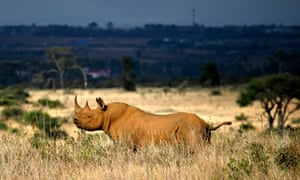
Poachers slaughter rhino in Nairobi national park.

A rhino is seen at Nairobi's National ParkPoachers have slaughtered a rhino in a heavily guarded national park near Nairobi in a brazen attack that flouts severe new wildlife crime laws aimed at stemming a surge of such killings.
The shooting of elephants and rhinos for their ivory and horns has risen in Kenya in recent years and a new report reveals the tiny fines and near absence of imprisonment that has provided little deterrent to the lucrative crimes.
Earlier in January, life imprisonment and much heavier fines were introduced in new laws, but the poaching of the rhino in the Nairobi park, just 4.3 miles from the capital, and the headquarters of the government's Kenya Wildlife Service (KWS), shows the scale of the challenge that remains in protecting the nation's threatened wildlife.
"Nairobi national park is one of the best-protected areas, so it is a really shocking thing for us," said KWS spokesman Paul Udoto. "The rhino horns were hacked and taken away. Investigations are under way."
Paula Kahumbu, executive director of Nairoibi-based NGO WildlifeDirect, told the Guardian: "It is very exciting what is happening now with the new laws. They had been just sitting around for 10 years, but the proof of the pudding will be if we put some serious players behind bars." WildlifeDirect's report found that from 2008-2013, just 4% of those convicted of wildlife crimes in 18 courts in affected regions were sent to jail. The fines levied instead were consistently far below the maximum 40,000 Kenyan shillings ($460) and in some cases were just $1 per item. In contrast, demand from Asia for rhino horn has made it more valuable than gold or cocaine, and across Africa poaching has grown into a major activity for organised crime and terror groups.
On Monday, in the first case under the new law, a Chinese man pled guilty to carrying an entire elephant tusk in a suitcase while in transit from Mozambique to China via Nairobi. Tang Yong Jian, 40, now faces a fine of up to 20 million Kenyan shillings ($240,000) or life in jail. Previously, the maximum prison term was 10 years.

Poaching severely harms wildlife in Africa, the only continent not to have driven most of its large animals to extinction, but also damages communities, said Kahumbu. Poor young men, tempted by the prospect of quick riches, are often killed or injured, as are wildlife rangers, eight of whom were killed in Kenya in 2013. "There is insecurity for people in these areas, as people are running around with guns, and the communities also lose the potential for tourism," said Kahumbu.Kahumbu said: "This is the first time we have seen the government getting serious about this. We are now starting to see public concern turning into a national sense of responsibility." However, she added that the new severe penalties would mean far fewer poachers pleading guilty and would mean even stronger evidence would be needed to secure convictions.
Furthermore, she said: "It is very easy for criminal enterprises to set up here and they specialise in the corruption of officials: the impact on Kenya is enormous." WildlifeDirect's report, which examined 314 cases, found none in which a KWS officer was convicted, despite frequent arrests. The last poacher killed on a ranch turned out to be a policeman, Kahumbu said.
In 2013, between 40 and 60 rhinos are thought to have been poached in Kenya, but not a single horn was recovered. "It is obviously getting out of the country," Kahumbu said. "And the size of ivory shipments is going off the charts too."
Kenya has begun inserting microchips into rhino horns and wildlife officials plan eventually to microchip all the rhinos in the country, just over 1,000 animals altogether.
In 2013, the world's top wildlife crime official told the Guardian that crime syndicates and terrorists were outgunning those on the frontline of wildlife protection and posed a deadly and immediate threat to both people and animals. John Scanlon, secretary general of the Convention on International Trade in Endangered Species, said the law enforcement fightback must mirror the war against illegal drugs, with undercover operations and harsh penalties.

With hunting for ivory once more a concern, conservation efforts have switched to trying to influence public opinion in Asia

.
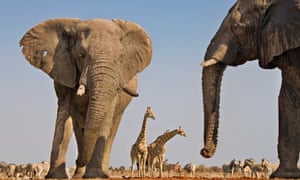
Elephants at a waterhole
 Elephant numbers in one major African reserve have fallen from 50,000 to 13,000 in six years.  Photograph: Frans Lanting/Corbis
No one could be entirely sure that the tusks – great curves of hard dentine coated in enamel – would actually burn. To be on the safe side, park wardens doused them in petrol and arranged them in a pyre. When set alight, the ivory burned fiercely, watched by Kenyan cabinet ministers, diplomats, conservationists and, most importantly, television crews and photographers, who relayed the images all over the world.
That was the morning of 18 July 1989, when a bonfire was made of 12 tonnes – or nearly £2m worth – of ivory in a spectacle designed to send out the message that the killing of elephants and the trade in their tusks had to be stopped. In the preceding decade numbers of Africa's largest land mammal had fallen from 65,000 to 17,000.
"To stop the poacher, the trader must also be stopped; and to stop the trader, the final buyer must be convinced not to buy ivory," said Daniel Arap Moi, Kenya's then president. "I appeal to people all over the world to stop buying ivory."
Remarkably, they did. And soon after that, the Convention on International Trade in Endangered Species (Cites) placed ivory in its Appendix I, effectively creating an outright ban on the trade.
The site where the pyre was lit, two miles inside the gates of the Nairobi national park, is now marked by a grandiose stone tomb. It sits in a neglected picnic site where a scattering of concrete benches surrounds a faded sign that recounts the historic day and concludes: "As you picnic here, reflect and join Kenyans in saying never again." But for all the imploring, it has happened again. In the past five years the poaching crisis has returned in response to rising demand from newly wealthy markets in Asia.
In the Selous game reserve in Tanzania, home to one of the two largest populations of African elephants, numbers had fallen from 50,000 in 2007 to 13,000 by the end of last year. Globally, up to 100 elephants a day are thought to be poached for their tusks in a worse slaughter than that of the 1980s, according to conservationist Allan Thornton, president of the Environmental Investigation Agency, the international organisation that provided much of the evidence on which the original ban was based.

"Hopefully we are building to a moment similar to 1989, although the current situation is far more damaging to Africa's elephant populations," said Thornton. "Poaching and the illegal ivory trade appear to still be gaining ever greater momentum to supply the markets in China and Japan."The rhino – prized for its horn, which is spuriously claimed in some cultures to have medicinal properties – is in similarly dire straits. It is in this context that up to 50 world leaders will converge on London on Thursday for aconference on the illegal wildlife tradethat may represent the best hope for reversing the trend.
The 1989 ban and the accompanying publicity turned western public opinion against ivory. Within a year, the price of ivory had plummeted from tens of thousands of pounds for a carved tusk to just £1 a kilo.
Among the "range states" – countries where elephants live in the wild – there was disagreement over the 1989 ban. Several southern African nations, including Botswana and Zimbabwe, argued that stockpiled ivory, which they said had been collected from pachyderms that died of natural causes, should be sold at auction. The first of these legal auctions took place in 2002. A second "one-off sale" was sanctioned in 2007, despite fierce opposition from conservationists, who objected both to the auction and to Cites's approval of China as a bidding nation. They warned that China was in no position to control the illegal trade and that the 70 tonnes it bought would spur demand.
Peter Knights, head of the pressure group WildAid, watched what happened next. The presence of legal and illegal ivory in the market created ambiguity for consumers as well as providing cover for criminal enterprises looking to launder their supply from poachers.

Knights believes that the 21st century equivalent of the Nairobi bonfire began in the unlikely setting of Denver, Colorado, in a warehouse on the edge of the Great Plains. It was here, at the offices of National Wildlife Property Repository, that six tonnes of ivory, seized over time from smugglers entering the US, was destroyed. It is a sign of the times that ivory is now crushed rather than burned – environmentalists had been concerned about carbon dioxide emissions."We thought we had saved the elephant and then we found ourselves at square one again," said Knights. His organisation is calling for an end to ivory sales and the destruction of existing stockpiles.
Similar stockpiles have been crushed in the Philippines and Kenya, while Hong Kong has also agreed to destroy much of its reserve. China followed last month, feeding seven tonnes of seized ivory into a tarmac-crushing machine. But even this still represents only a fraction of existing stockpiles.
The London conference is expected to see rich nations pledge hundreds of millions of pounds to an emergency fund to finance anti-poaching efforts in the range states, but seasoned campaigners will be watching for commitments from the ivory-consuming countries.
Knights, who compares attempts to stop poaching in Africa with failed efforts to strangle the illegal drug trade in producing countries, warns that only a "demand-side" approach will work. WildAid has persuaded famous Chinese athletes such as the basketball star Yao Ming to lead a public awareness campaign to persuade Chinese consumers not to purchase ivory.
"We have tried the supply side and it clearly isn't working," he said.
Meanwhile the killing continues. There are no elephants in Nairobi national park, but a fortnight ago, only a rifle shot away from the site where the ivory was burnt, a female rhino was slaughtered – in what is supposed to be among the most heavily protected parks in east Africa.

Illegal wildlife trade.- Kenya to burn biggest ever stockpile of ivory

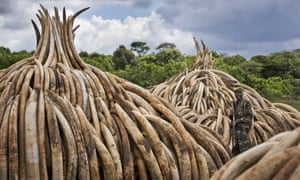
Tusks from more than 6,000 illegally killed elephants will be burned in Kenya on Saturday, the biggest ever destruction of an ivory stockpile and the most striking symbol yet of the plight of one of nature’s last great beasts.
The ceremonial burning in Nairobi national park at noon will be attended by Kenya’s president, Uhuru Kenyatta, heads of state including Ali Bongo Ondimba of Gabon and Yoweri Museveni of Uganda, high-ranking United Nations and US officials, and charities. A wide network of conservation groups around the world have sent messages applauding the work.
On Friday, Kenyatta said Kenya would seek a “total ban on the trade in elephant ivory” at an international wildlife trade meeting in South Africa this September. “The future of the African elephant and rhino is far from secure so long as demand for their products continues to exist,” he said.
On Saturday about 105 tonnes of elephant ivory and 1.5 tonnes of rhino horn will burn in 11 large pyres, about seven times the amount previously burned in a single event. The bonfire, so big it will take about four hours to burn completely, highlights the continuing crisis in elephant populations. About 30,000 to 50,000 elephants a year were killed from 2008 to 2013 alone, according to the Born Free Foundation, and the rate of killing is outstripping the rate of births in Africa.
Prior to the burning, as much scientific and educational information as possible has been extracted, and Kenya will be left with about 20 tonnes of ivory that are still going through the legal process.
Ronnie Wood, the Rolling Stone and patron of the Tusk charity, was among celebrities speaking out ahead of the burn: “It makes me so sad to think that in another 15 years or so elephants, rhinos and even lions could have disappeared from the wild, denying our children the experience of knowing and loving them. We just cannot allow that to happen.”
Kenya first burned ivory in 1989, under president Daniel Arap Moi, as a symbol of its determination to protect its remaining elephant population, which had fallen90% in the previous 15 years, from 168,000 to 15,000 elephants.


Four countries – Kenya, Gabon, Uganda and Botswana – have among them more than half of Africa’s remaining elephants. The presidents will meet ahead of the burning to discuss new ways of preventing poaching, including a call to close down the world’s remaining legal ivory markets, at the conference of the Convention on International Trade in Endangered Species (Cites), in Johannesburg this September.


Burning seized ivory is a highly public symbol of the fight to save the elephant from extinction. Burning or crushing puts the ivory beyond use, preventing it from fuelling the world’s ivory markets, legal and illegal, as a way of stamping out that trade. More than a dozen countries have held similar public destructions of endangered animal products, including MalaysiaHong Kong and the United Arab Emirates.Iain Douglas-Hamilton, founder of Save the Elephants, said that cooperation among African countries was essential. “This [meeting] gives hope that there is political will to take on the challenges of poaching, trafficking, and high-level corruption that threaten the continent’s natural heritage.”
Some countries have tried allowing limited exploitation, for hunting and trophies, of their remaining “charismatic megafauna” as a method of conservation. Last year, the limited permitted hunting of big game was brought to global attention when the lion Cecil was shot, sparking widespread outrage and a ban on lion trophy imports by France which was joined by the Netherlands banning them on Friday.
In 2008, the ban on ivory was temporarily lifted to allow stockpiles to be sold to the profit of the countries that owned them. But according to campaigners this resulted in a “spike” in poaching, with about 100,000 elephants lost as a result.
This approach should be abandoned, according to a wide range of NGOs. “All experiments to permit a legal, controlled trade in ivory have failed,” said Daniela Freyer, co-founder of Pro Wildlife. “We can turn the tide if we close the legal markets that enable laundering of ivory from poached elephants or leaked from stockpiles.”


Campaigners are also clear on the need for buyers of ivory to be targeted in campaigns to stop the trade. Ivory, rhino horn and other parts of endangered animals, including tiger skins, are sometimes use in Chinese medicine, but potentially a bigger problem is their use in high-status gifts in some Asian countries.Other methods of discouraging poaching, such as removing tusks anddyeing rhino horns, have been tried to limited effect. Poaching has been fuelled by conflict, as well as organised crime, in many parts of Africa, where militias have used their arms, helicopters and jeeps to wage war on the wardens of conservation areas and on local populations.
China officially disapproves of such gifts, and there have been moves to discourage and close down domestic markets, but widespread trade continues and it is not known when China’s pledges to stop it will be fulfilled.
“Ending the demand is absolutely key, but we don’t know how long this will take,” said Max Graham, chief executive of Kenyan charity Space for Giants. “We are already losing tens of thousands of elephants a year from a population of perhaps less than 400,000, and we desperately need a holding position.”
He called for “robust frontline protection, investment to reduce the cost and increase the benefits to local people of conserving elephants, and global efforts to cut demand for ivory”.