TERRORGEFAHR, 57 GRAD, SKORPIONE Der gefährliche Einsatz der Bundeswehr in Mali


Vor allem in der Nacht sei die Gefahr groß, angegriffen zu werden.
„Der letzte Raketen-Angriff auf das Lager fand im Dezember statt“, berichtet der Oberstleutnant. Niemand wurde verletzt. Seit dem ist es ruhig, die Lage offenbar im Griff. Dennoch sind die deutschen Soldaten im Wüstencamp in besonders geschützten Wohncontainern untergebracht. Auf dem kompletten Areal stehen meterhohe Schutzwände aus Schotter und Sand.
„Außerhalb des Lagers ist die IED-Bedrohung, also die Bedrohung durch improvisierte Sprengfallen oder Minen immer vorhanden", so Vogt, der täglich eine Bedrohungsanalyse erhält. Zuletzt starben drei französische Soldaten, als sie mit ihrem gepanzerten Fahrzeug in Tessalit auf eine Druckplatten-Mine fuhren. „Die Bedrohung ist in der Stadt Gao allerdings weniger groß, denn die Terroristen hier versuchen, zivile Opfer zu vermeiden“, sagt Vogt.
VergrößernOberstleutnant Marc Vogt (43) ist Chef der deutschen Truppen in Gao
Oberstleutnant Marc Vogt (43) ist Chef der deutschen Truppen in Gao
Foto: Claas Weinmann
Viele seiner Soldaten vergleichen den Einsatz oft mit Afghanistan.
Die malische, überwiegend muslimische Bevölkerung sei viel freundlicher und aufgeschlossener, heißt es unter den 80 Objektschützern, die abwechseln jeden Tag auf Staubpisten unterwegs sind. Bei ihren Patrouillenfahrten laufen Kinder hinter den Gefechtsfahrzeugen vom Typ Eagle und Dingo her und winken. Frauen baden unbekümmert nackt im Niger - nur ein paar Meter von den Deutschen entfernt.
„Oft verlangen die Dorfältesten oder Bürgermeister noch mehr Patrouillen von uns. Wir genießen hier einen ausgezeichneten Ruf“, sagt einer der Soldaten, der fast täglich zur Erkundung und Absicherung unterwegs ist. Die Touareg hingegen verziehen hingegen keine Miene, wenn sie auf die Bundeswehr treffen. Im Vergleich zum Einsatz am Hindukusch gebe es in Mali deutlich weniger Selbstmord-Attentäter. Eine Analyse der Vereinten Nationen zeigt: Die, die sich dennoch in die Luft sprengen, waren zumeist Ausländer.

MEHR ZUM THEMA BUNDESWEHR IN MALI

Bundesverteidigungsministerin Ursula von der Leyen (56, CDU) bei ihrer Ankunft auf dem Flughafen in Bamako (Mali)

URSULA VON DER LEYENDie Bundeswehr-Mission in Mali

Verteidigungsministerin Ursula von der Leyen ( 56, CDU) ist zu einem zweitägigen Besuch im westafrikanischen Mali.
Doch die Sicherheitslage könnte sich in den kommenden Jahren weiter verschärfen.
Der Grund: Es gibt in Mali einen sehr hohen Anteil an Jugendlichen. 50 Prozent der Bevölkerung sind unter 15 Jahren alt. „Wenn sie keine Perspektive haben, dann können sie gegen Bezahlung leicht radikalisiert werden“, warnt ein hochrangiger Soldat, der anonym bleiben möchte.
VergrößernBundeswehrsoldaten im Camp Castor
Bundeswehrsoldaten im Camp Castor
Foto: Claas Weinmann
Wer genau sind die Angreifer, die den deutschen Soldaten gefährlich werden könnten?
Camp-Castor-Chef Marc Vogt wird nachdenklich. „Es gibt nicht nur eine Gruppe hier in Mali.“ Der Oberstleutnant unterscheidet nach „bewaffneten Kräften“, die ein Friedensabkommen unterzeichnet haben. Sie seien mit dem Friedensprozess zwar einverstanden, aber „dennoch kann auch von diesen Gruppen stets eine potentielle Gefahr ausgehen.“
Noch gefährlicher seien aber Terroristen, die in Mali einen muslimischen Staat etablieren wollen und die Präsenz westlicher Truppen entschieden ablehnen. „Sie wollen keine stabilen Verhältnisse.“ Je nach Region seien sie - auch über Familien- und Clan-Strukturen - mit ISIS oder Al Qaida im Islamischen Magreb vernetzt.
Doch nicht nur außerhalb des Camp Castor lauert die Gefahr!
„Das heiße und trockene Wetter macht vor allem den Soldaten zu schaffen, die frisch in den Einsatz kommen“, sagt Marc Vogt. Die Gefahr der Dehydrierung sei groß. „Der Boden hier strahlt die Hitze zurück, wir haben regelmäßig über 50 Grad.“
Auch die Fauna berge ein hohes Gesundheitsrisiko: Vor allem nachts lauern in den Kabelschächten, unter Steinen und fingerbreit großen Spalten der Schutzwände Giftschlagen, Skorpione und beißende Spinnen. Malaria-Prophylaxe sei für jeden Soldaten Pflicht. "Man muss ständig vorsichtig sein, wo man hinlangt, wo man sich bewegt und wie man handelt", sagt Vogt.

MEHR ZUM THEMA FLÜCHTLINGE

EU-Mission zu Flüchtlingsrettung im Mittelmeer: Von der Leyen besucht  Truppe in Süditalien

EU-MISSION IM MITTELMEERVon der Leyen besucht Truppe vor Süditalien

Tausende Flüchtlinge hat die Bundeswehr im Mittelmeer gerettet. Verteidigungsministerin von der Leyen machte sich vor Ort ein Bild.
Bis zum Juni sollen 400 Soldaten in Camp Castor ihren Dienst tun: Aufwuchs, wie es in der Militärsprache heißt. Dazu gehören vor allem Soldaten, die sich um Aufklärung kümmern – mit Drohnen, Spähfahrzeugen, Radar und vielen Gesprächen mit Einheimischen.
So will die Bundeswehr Erkenntnisse gewinnen, „was sich überhaupt hier in diesem Land abspielt“, sagt Vogt. Die Ergebnisse werden an die Führung von MINUSMA weiter gegeben.
Oberstleutnant Marc Vogt ist einerseits ranghoher Soldat, andererseits aber auch ein Mensch mit Emotionen. Er sagt: „Vom militärischen Auftrag her ist diese Verwendung hier ein absoluter Höhepunkt. Die Kehrseite ist die private Seite. Ich bin verheiratet, habe drei Kinder. Bei allen habe ich durch Einsätze den ersten Geburtstag, den ersten Schritt und den ersten Zahn verpasst.“ Vogt drückt seine Zigarette aus, geht zurück in die Stabsstelle.
Wenige Meter neben der Camp-Zentrale fahren die Objektschützer aus Schortens (Niedersachsen) mit vier gepanzerten Schutzfahrzeugen auf dem roten, staubigen Boden in Richtung Niger-Brücke. Eine Patrouille rund um Bilali Koyra, Gao-Süd und Bagoundie.

CRISIS DE REFUGIADOS Europa está colapsada.

Los cuatrillizos Xhesika, Frederik, Amelia y Olivia, de una familia de refugiados albanos, durante su bautizo en la iglesia de Jena-Winzerla (Alemania). EFE
Los cuatrillizos Xhesika, Frederik, Amelia y Olivia, de una familia de refugiados albanos, durante su bautizo en la iglesia de Jena-Winzerla (Alemania)
Desde que el pasado 18 de marzo los líderes europeos dieran el visto bueno al pacto con Turquía para detener los flujos de refugiados y luchar contra las redes de trata, los acontecimientos no han hecho sino demostrar lo erróneo de tal medida.

En plena efervescencia de la crisis y con claros brotes xenófobos en algunos países, conocimos los resultados de las elecciones regionales alemanas. En ellas se constata el auge de Alternativa por Alemania (AfD), mientras que la CDU de Merkel ha reducido sensiblemente su apoyo popular y el socialdemócrata SPD cae estrepitosamente. Demasiado evidente para no apreciar paralelismos con otros países europeos.
Primero conocimos el contenido del plan de acción pergeñado con Turquía; éste supone la devolución de nuevos migrantes irregulares llegados desde aquel país y el reasentamiento de refugiados sirios. En compensación al esfuerzo otomano, la UE se comprometió a acelerar las negociaciones de adhesión de este país y la eliminación de visados para sus ciudadanos; todo ello acompañado de una cifra de unos 6000 millones de euros para el gobierno turco. Incluso, valoró el establecimiento en Siria de “zonas más seguras”, sin ver el riesgo que eso acarrearía de un bombardeo nada selectivo por cualquiera de las partes en la contienda.
Ambos acontecimientos nos llevan a reflexionar ¿hacia dónde va la Europa de los derechos y las libertades?
Por más maquillaje que se dé al pacto con Ankara, difícilmente puede encubrir el desconocimiento palmario del Derecho internacional relativo a la protección de refugiados y de la propia Carta de los Derechos Fundamentales de la UE. Y es que la propuesta no permite distinguir a los refugiados en medio de devoluciones masivas de inmigrantes, por cierto, también prohibidas por el Derecho internacional; ni se da la debida garantía a los demandantes de asilo de nacionalidades diferentes a la siria.
La realidad ha sido más sensata que el pensamiento de los dirigentes políticos y ha llevado a una suspensión temporal de la aplicación del “pacto de la vergüenza”, ante la imposibilidad de las autoridades helenas de identificar y gestionar las demandas de asilo.
Pareciera que el humo del temor al refugiado, máxime si es de religión musulmana, nublara los ojos y el entendimiento de los europeos lo suficiente para no ver lo evidente: cerramos la puerta a un millón de refugiados que huyen de la guerra, y que por eso mismo debemos proteger, para abrirla a más de setenta millones de turcos con el único afán, legítimo por supuesto, de mejorar su nivel de vida. ¿También ante ellos los Estados europeos que han suspendido Schengen harían lo propio?
Ofrecemos millones a un gobierno que acaba de demostrar, una vez más, su escaso compromiso hacia los valores europeos de libertades, derechos humanos y democracia, creyendo ciegamente que los destinará a los refugiados en su territorio y no para reforzar su posición en la guerra de Siria; la posición turca hasta el momento hace dudar si su prioridad es luchar contra el DAESH o debilitar a los kurdos. Si en un momento de precario alto el fuego y negociación contribuyéramos a atizar de nuevo el conflicto, aunque fuera por esta vía indirecta, el flujo de refugiados no cesaría; solo que entonces los culpables seríamos los europeos, exclusivamente.
Por fortuna, y demostrando las virtudes de un parlamentarismo denostado por otras razones, algunos Parlamentos nacionales, como el español, han elevado sus exigencias al gobierno de obrar ante las instancias de la UE de acuerdo con los compromisos internacionales que garantizan los derechos de los demandantes de asilo. Y es que no hay mejor lucha contra las redes de trata que abrir las puertas a los refugiados, traerlos regularmente hasta el país de la UE que les corresponda, cumplir nuestra obligación internacional de analizar individualmente sus demandas de asilo confiando en la labor policial para evitar sorpresas no deseadas, y ofrecerles nuestros derechos y libertades impidiendo, naturalmente, que ninguno de ellos cuestione los mismos.
Cuando un pueblo pierde sus valores lo pierde todo y, en este momento histórico, Europa parece estar perdiendo la razón, sin ni siquiera ver las consecuencias que los hechos pueden acarrear.
La vieja y egoísta Europa, carente de ideas valientes, se encamina hacia su definitiva decrepitud si, además, enarbola la bandera del interés nacionalista de corta visión y del desprecio por los derechos que nos han mantenido en paz durante décadas.
Si el sentido de la solidaridad no nos invade, cúmplanse al menos las normas que nos obligan y que mejor reflejan las señas de identidad europeas, porque la libertad sólo es posible en aquellos países en los que el Derecho predomina sobre las pasiones.

Horst Seehofer.-Angela Merkels Brief an Seehofer: Drei Monate später ist die Antwort da

Bayerns Ministerpräsident Horst Seehofer


Bayerns Ministerpräsident Horst Seehofer
Monatelang musste Horst Seehofer auf eine Antwort warten - jetzt hat Kanzlerin Angela Merkel den Brief des bayerischen Ministerpräsidenten zur Flüchtlingskrise erwidert. Der Machtkampf der beiden schwelt weiter.
Angela Merkel hat sich Zeit gelassen mit ihrer Antwort an Horst Seehofer. Gemessen an der Dringlichkeit, die der bayerische Ministerpräsident in seinem Schreiben vom 26. Januar unmissverständlich zum Ausdruck gebracht hatte, sogar sehr viel Zeit."Unverzügliches Handeln" sei erforderlich, hatte der CSU-Politiker in seinem sechsseitigen Brief mit den Forderungen des Freistaatszur Lösung der Flüchtlingskrise geschrieben. Bayern erwarte "endlich wirksame Maßnahmen durch den Bund zur Begrenzung des 'Flüchtlingsstroms'".
Es vergingen Tage, Wochen und Monate, aber es kam keine Antwort der Kanzlerin. Jetzt, nach rund einem Vierteljahr, ist sie da. Am vergangenen Donnerstag sei der Brief eingegangen, bestätigte am Montag eine Sprecherin der bayerischen Staatskanzlei.
Zwar wurde über den Inhalt des Schreibens zunächst nichts bekannt. Aber allein die ersten Reaktionen Seehofers legen nahe, dass der monatelange Machtkampf zwischen ihm und der Kanzlerin noch nicht beendet ist - und dass sich der Freistaat nun seinerseits Zeit lassen will, um über die angedrohte Verfassungsklage gegen die Bundesregierung zu befinden: "Eine Entscheidung wird nicht in den nächsten Tagen fallen", sagte Seehofer am Montag.
Kein Schnellschuss
Der bayerische Ministerpräsident zeigte sich betont gelassen: Er selbst habe den Brief noch nicht gelesen, sagte Seehofer nach einem Treffen mit dem kroatischen Premierminister Tihomir Oreškovi in München. Er habe viele Termine, stecke in einer "Vollzeitbeschäftigung". Entsprechend werde sich sein Kabinett voraussichtlich erst in der übernächsten Sitzung mit dem Brief Merkels befassen. "Ich mache da jetzt keinen Schnellschuss", sagte Seehofer. Man werde keine Fristen versäumen.
Laut einem Bericht des "Münchner Merkur" hatte Seehofer bei einem Termin am Vormittag gesagt, dass seine Beamten derzeit Merkels Brief auswerten würden: "Es ist nicht so, dass bei uns große Hektik ausbricht, wenn aus dem Kanzleramt ein Brief eingeht."
Seehofer lässt Merkels Brief also erst einmal durch die Abteilungen seiner Staatskanzlei wandern und straft die Absenderin durch vorübergehende Nichtbeachtung seinerseits. Ganz so wie vor wenigen Wochen: Damals wurde er von Journalisten gefragt, wie er Merkels Auftritt in der ARD-Sendung "Anne Will" bewerte, wo sie sich ausführlich zur Flüchtlingskrise geäußert hatte. Er schaue sonntags nie fern, antwortete er damals genüsslich.
Natürlich betont Seehofer am Montag, dass es einfach nur angemessen sei, das Antwortschreiben der Bundeskanzlerin in Ruhe zu prüfen. Und trotzdem sendet er mit seiner Reaktion vor allem auch dieses Signal nach Berlin: Ihr habt mich monatelang auf eine Antwort warten lassen, jetzt drehe ich den Spieß um.
Dabei haben sich die Rahmenbedingungen in der Flüchtlingskrise erheblich geändert, seit Seehofer seinen Brief Ende Januar aufsetzte:
  • Die EU und die Türkei einigten sich nicht zuletzt auf Drängen Merkels auf ein Flüchtlingsabkommen.
  • Die Zahl der in Deutschland ankommenden Flüchtlinge ging zuletzt rapide zurück, weil Slowenien, Kroatien, Serbien und Mazedonien die Balkanroute faktisch dichtgemacht haben.
"Innertürkische Probleme"

Hat sich damit eine Klage Bayerns gegen die Bundesregierung nicht längst erübrigt? Das könnte man denken. Andererseits sitzt der Frust in der CSU tief, dass Bayerns Forderungen wie etwa die nach einer Obergrenze für Flüchtlinge bei Merkel keinerlei Zustimmung fanden. Im Freistaat will man zudem abwarten, ob sich möglicherweise schon bald neue Ausweichrouten entwickeln und die Zahl der in Deutschland ankommenden Flüchtlinge wieder steigt.
Außerdem: Seehofer hält nicht viel von dem Flüchtlingsabkommen zwischen der EU und der Türkei. Vor dem Gesamtpaket könne er "nur warnen", sagte der CSU-Chef dem "Bayernkurier". Die geplante Visafreiheit für türkische Staatsbürger in Europa könne dazu führen, dass "innertürkische Probleme" nach Deutschland kommen würden - ähnliche Bedenken hatte bereits Bayerns Innenminister Joachim Herrmann (CSU) geäußert.
Es geht also weiter mit den Sticheleien aus München. Ob er sich mehr Dankbarkeit Berlins gegenüber den Balkanländern für die faktische Schließung der Balkanroute gewünscht habe, wird Seehofer am Montag gefragt. Seine knappe Antwort: Ja.

Extremisten töten kanadische Geisel.-Philippinen


Im September 2015 wurde der Kanadier John Ridsdel von der islamistischen Abu Sayyaf auf den Philippinen verschleppt. Nun haben seine Entführer ihn getötet.
Vor etwa sieben Monaten wurde John Ridsdel gemeinsam mit einem kanadischen Landsmann aus einer philippinischen Hotelanlage entführt, jetzt haben Behörden im Süden des Landes den Kopf des Kanadiers entdeckt. Die andere Geisel befindet sich noch immer in den Händen der extremistischen Abu Sayyaf.

Premierminister Justin Trudeau sprach in einer kurzen Fernsehansprache von einem "kaltblütigen Mord". "Kanada verurteilt diese Brutalität rückhaltlos." Bemühungen um die Freilassung der zweiten Geisel seien im Gange.
Die Männer waren am 21. September vergangenen Jahres von Abu Sayyaf aus einer Hotelanlage verschleppt worden. Im März war ein Video mit den ausgemergelten Geiseln aufgetaucht. Mit ihnen war zudem ein Norweger in dem Film zu sehen, der zur selben Zeit verschleppt worden war. Die Islamisten drohten mit der Ermordung der Männer, wenn ihrer Forderung nach einem Lösegeld in Höhe von mehreren Millionen Euro nicht nachgekommen werde. In einem Video zuvor hatten sie 20 Millionen Euro für jede der Geiseln gefordert.
Abu Sayyaf wurde in den 90er Jahren mit Geld von Al-Kaida-Chef Osama bin Laden gegründet. Die Gruppe wurde durch die Entführung zahlreicher Ausländer bekannt. Erst im Oktober ließ sie zwei Deutsche nach einem halben Jahr in Geiselhaft frei. Neben den wiederholten Entführungen von Christen und Ausländern, um Lösegeld zu erpressen, verübte die Gruppe zahlreiche Anschläge.

Cold Blood.- Harper Lee's article for FBI magazine on infamous killings found

Biographer of To Kill a Mockingbird author finds unsigned piece on quadruple murder at centre of Truman Capote’s In Cold Blood

Clipping from the Garden City Telegram, in which Harper Lee’s friend Dolores Hope alerted readers to a forthcoming article by the To Kill a Mockingbird author
The discovery of an earlier manuscript from the US novelist Harper Lee was the publishing sensation of last year but now her biographer, Charles J Shields, believes he has found another previously unknown Lee text – a feature article about a notorious real-life quadruple murder.

The piece was written for the March 1960 issue of the Grapevine, a magazine for FBI professionals, just months before she was to publish her classic novel, To Kill a Mockingbird. It was unsigned, but Shields’s detective work uncovered evidence which appears to confirm its true authorship.
The article was about the gruesome murder of Herb and Bonnie Clutter, and their teenage children Nancy and Kenyon at their farmhouse in Kansas. Lee accompanied her childhood friend Truman Capote on his assignment for the New Yorker, reporting on how the community was reacting to the brutal murders.


Harper Lee’s feature article about a notorious real-life quadruple murder of the Clutter family in Kansas, published in the March 1960 issue of the Grapevine

Pinterest
 Harper Lee’s feature article about a notorious real-life quadruple murder of the Clutter family in Kansas, published in the March 1960 issue of the Grapevine Photograph: The Grapevine

Their interviews included detective Alvin Dewey of the Kansas Bureau of Investigation and they later returned for the trial of the killers. Capote would later use the material in his non-fiction account, In Cold Blood, downplaying Lee’s contribution in describing her as his “research assistant”. The events, in turn, were depicted in two films, Capote and Infamous.
In her article, Lee wrote of “the most extraordinary murder case in the history of the state”. She reported that the murder victims – “prominent Methodists and leaders in community activities” – had been “bound hand and foot and shot at close range … Clutter’s throat had been cut.”
She continued: “Dewey’s role … was doubly hard; the late Herbert Clutter was a close personal friend … The clues Dewey and his colleagues worked on in the beginning were meager [sic]. The killers took with them the gun and shells used to murder the family; adhesive tape used to gag three of the victims could have been bought anywhere … However, in the basement furnace room where Clutter’s body was found, investigators discovered a clear footprint etched in blood.”


She reported that two men later confessed to the murders and that their “activities … netted them between $40 and $50 in cash”.
Shields found the article while revising his 2006 bestselling biography, Mockingbird: a Portrait of Harper Lee. He told the Guardian that he was “looking for any clues” he might have previously overlooked. He began poring over Kansas newspapers and, in the Garden City Telegram, began reading a column by Dolores Hope, “who I already knew was a friend of Harper Lee”, he said.
Hope’s “folksy” columns were “never very newsy”, but he was astonished by an extraordinary couple of paragraphs alerting readers to a forthcoming article.
Hope wrote: “The story of the work of the FBI in general and KBI Agent Al Dewey in particular on the Clutter murders will appear in Grapevine, the FBI’s publication.
“Nelle Harper Lee, young writer who came to Garden City with Truman Capote to gather material for a New Yorker magazine article on the Clutter case, wrote the piece. Miss Harper’s first novel is due for publication … this spring and advance reports say it is bound to be a success.”


FacebookTwitterPinterest
 Harper Lee died last   Celano/WireImage

How right she was. Lee became one of America’s most revered writers. To Kill a Mockingbird – a story of race relations and legal injustice set in the American south in the 1930s – has been described as one of the great bestselling novels of the 20th century. In 1962, it inspired the Oscar-winning film starring Gregory Peck as lawyer Atticus Finch. When Lee was asked why she did not write another novel, she replied: “I have said what I wanted to say, and I will not say it again.” Go Set a Watchman, which features characters from Mockingbird about 20 years later was published last year to mixed reviews. Lee died in February aged 89.
Shields immediately contacted the Grapevine in Washington: “They said there’s been a rumour in the office for years that Harper Lee submitted something, but we don’t see anything with her byline.”
From the date of Hope’s column – February 1960 – he suggested looking in their February or March issue of that year: “Lo and behold, in March 1960 is a … very well-written feature story about the Clutter case.”
Commenting on why she did not have a byline, he said: “Because it was typical of Harper Lee to not try to crowd her friend Truman.” He added: “It reads like a darned good feature story.”
Further evidence of her authorship lies in details to which only she and Capote were privy, he discovered.
He will include his research in Mockingbird: a Portrait of Harper Lee: From Scout to Go Set a Watchman, published by Henry Holt on Tuesday.
The Grapevine will reprint Lee’s article next month. Shields has written the introduction for this “exciting find”

Migration. Italy's plan to combat Libyan migrant smugglers could mean chasing shadows

Fears of a refugee wave through north Africa are based on thin evidence and deploying naval vessels may have little effect on dinghies already at sea

Migrants sit in their boat during a rescue operation by Italian navy vessels off the coast of Sicily.
 Migrants wait in their boat during a rescue operation by Italian navy vessels off the coast of Sicily. 
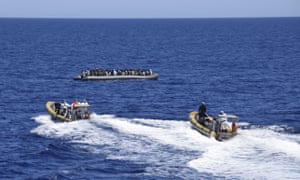
Though migration levels from Libya are no higher than they were last year, European governments are terrified that the closure of the refugee route from Turkey to Greece will lead to a fresh surge through the north African country towards Italy.
Over the past few days, these fears prompted western leaders to discuss a two-pronged response. First, Rome proposed the deportation of Italy-bound migrants back to war-torn Libya. Then Barack Obama agreed at a meeting with European allies to add US ships to ongoing anti-smuggling operations in international waters off the Libyan coast.
Italy’s defence minister, Roberta Pinotti, told Italian media that a Nato-led anti-smuggling mission could be in operation as early as July. But such haste may have both practical and ethical pitfalls. For a start, western navies may not be able to do much against smugglers if the latter stick to international waters. By this point, senior smugglers have left their boats in the hands of either expendable juniors, or co-opted migrants.
Even if Nato gets approval from Tripoli to enter Libyan waters, they will still struggle to make an impact. Most migrant boats from Libya are rubber inflatables that carry no smugglers and are boarded from the country’s shore. Only a ground presence could stop their departure: by the time these dinghies are out at sea, there is little a naval mission can do to apprehend the smugglers who sent them.
Some migrant boats are repurposed wooden fishing boats. A naval mission within Libyan waters might stand a slightly better chance of subverting this model, but not by much. To load migrants on to the wooden boats, smugglers moor them a couple of miles out to sea, and then bring the migrants there in rubber dinghies.
In theory, western navies could arrest the smugglers while they wait on board the wooden boat for the migrants to arrive. But this would be hard: today’s smuggling vessels are yesterday’s fishing trawlers. To catch the smugglers, Nato would have to either stop every Libyan fisherman – or bomb whole fishing ports.
Deporting all migrants to Libya would also prove tricky. It is currently claimed by three rival governments, while an Isis affiliate controls part of the country. The internationally recognised government, which is the west’s only logical partner, could not operate from the Libyan capital for weeks, and the control it exerts over the country’s institutions is still loose. In purely practical terms, it’s not clear how easily it could facilitate the deportation of tens of thousands of people – or how willing it would be to do so.
In ethical terms, a deportation deal would be diabolical. Libya is a war zone. It has no means of welcoming refugees, and migrants have almost no rights or legal recourse. Many fall into modern day slavery, held captive and abused by kidnappers, or sometimes their employers. Those held in nominally state-owned detention centres live in squalid conditions with no access to lawyers. Former inmates previously interviewed by the Guardian claim to have been sold by camp officials to militias and even smugglers.
Until these myriad abuses are solved, demand for smugglers is likely to remain high, whether or not western navies enter Libyan waters. “It is not our choice to penetrate the sea,” an Eritrean nurse detained inside a Libyan detention centre said in an interview last year. “But if the government won’t help us, if UNHCR won’t help us, if no one can help us, then the only option is to go to the smugglers.”

Hofer.-Austrian far-right party's triumph in presidential poll could spell turmoil

.. .. ..


 Norbert Hofer with Heinz-Christian Strache, following the Freedom party’s victory. Photograph: Heinz-Peter 

Austria is braced for political turmoil with fears that the landslide victory for a rightwing populist and gun-carrying candidate in Sunday’s first-round presidential vote could trigger snap elections.
Norbert Hofer, of the rightwing Freedom party (FPÖ), defied pollsters’ predictions to beat the Green party’s Alexander Van der Bellen into second place, gaining 36% of the vote. The two candidates will go head to head in a run-off ballot on 22 May.
While the presidential post is mainly a ceremonial role, Hofer has threatened to make use of a right to dissolve parliament before the 2018 elections, warning other candidates in a TV debate that “you will be surprised by what can be done [by a president]”.
Hofer, a youthful 45-year-old who is partially paralysed after a paragliding accident, has campaigned for disability rights and is seen as having lent a friendly face to a party that balances virulently anti-immigration and Eurosceptic messages with leftist stances on welfare issues, led by firebrand Heinz-Christian Strache.
Hofer, who claims to protect himself in the “uncertain times” of the refugee crisis by carrying a Glock gun, scored overwhelming victories in all of Austria’s states apart from Vienna. In Styria, Burgenland and Carinthia – border states most affected by the refugee trail from the Mediterranean to central Europe – Hofer managed to gain 40% or more.
Some constitutional experts question whether Austria’s president would be able to dissolve parliament without the orders of the government, though since the presidential role has previously only ever been filled by politicians from the two main centrist parties, the situation is without precedent.
On Sunday night, while describing the result as a “rendezvous with history”, Hofer made clear that he regarded the result as an “intermediary step” on the way to a wider challenge to Austria’s political system.
The FPÖ is also leading polls for the parliamentary elections, with about 30% of the vote.


Should the FPÖ manage to return to government, it would ring alarm bells across the continent, with Austria joining a growing bloc of countries led by authoritarian and Eurosceptic governments , which includes Hungary and Poland. Hofer has signalled he would refuse to sign the Transatlantic Trade and Investment Partnership agreement with the US even if it was passed by his government.


Whatever the outcome on 22 May, it will be the first time since 1945 that the country’s president has not come from the two centrist parties, the Social Democrats (SPÖ) and the People’s party (ÖVP), who barely managed to scramble together a quarter of the vote.Sunday’s result was welcomed by far-right politicians across Europe, including Geert Wilders in the Netherlands and France’s Marine Le Pen, as well as politicians from Italy’s Lega Nord and Germany’s National Democratic party. Italy’s prime minister, Matteo Renzi, warned that the result could have consequences for the border region between Austria and Italy. “It would be a problem for Europe if the Brenner pass would be closed,” he said.

Second-placed Van der Bellen is an outsider candidate in his own right who ran for office without the official endorsement of the Green party and has criticised the Austrian government’s cap on asylum seekers. The 72-year-old veteran will now hope for endorsements from the mainstream parties to block Hofer’s rise to power.
Johannes Pollak, a political scientist at the Institute of Advanced Studies in Vienna, said Van der Bellen was a marginal favourite to win. “The established parties will do their best to stop a rightwing populist from coming to power. But after this political earthquake, it is hard to make a certain prognosis.”
Reinhard Heinisch, professor of political science at Salzburg University, said the momentum was on the side of the rightwing candidate. “Especially if the FPÖ manages to frame the next round of the election around a polarising issues – for or against refugees, for example – the establishment parties face an uphill battle,” he said.


Columnist Gerfried Sperl in Der Standard wrote: “A weakening of the parliament, an end to the division of powers, opposition to Brussels and a curtailing of the freedom of press: Vienna would not only be geographically located east of Prague, but politically too.”“On the surface, the situation may look similar to that in the US, but in America even the leftwing candidate Bernie Sanders has embraced a reformist agenda. In Austria, only the right has spelled this out.”

Moshe Kantor, president of the European Jewish Congress, described the Freedom party’s rise as “deeply troubling”. “That a country at the heart of Europe can show such support to the far right barely 70 years on from the Holocaust shows that our collective memories are failing,” he said.
Austria’s Social Democrat prime minister, Werner Faymann, who faced calls to resign after the vote, said the result was a “clear signal to the government that we have to cooperate more strongly”.
But many commentators say the crisis of the political establishment in Austria has much to do with the fact that the two centrist parties have governed the country in a “grand coalition” for the past 10 years.
“The message for SPÖ and ÖVP is simple: your time is up,” Viennese daily Die Presse commented. “After this Sunday we know for good: voting patterns in this country have radically changed. At least half of all votes are up for grabs and have nothing to do with factions and alliances. The candidates or groups that win are the ones who offer solutions, or at least pretend to offer them, or at least provide the right characters at the right time.”
Some critics say the Austrian government lost its credibility during the refugee crisis. After initially supporting the German chancellor, Angela Merkel’s open-border stance last October, the coalition government and in particular the conservative foreign minister, Sebastian Kurz, emerged as key drivers behind the closure of the Balkan route earlier this year.