Comentando una forma de vivir creativa y pasional, la textura es de rabia y emotividad, hay desesperación y un poco de ansiedad. ¡¡BASTA YA¡¡.
Juan Pardo Navarro
En solo una semana, en Córdoba (Argentina) los casos de dengue sumaron cien nuevos infectados, a la vez que se registró uno de chikungunya.
Los datos fueron oficializados por el Comité Intersectorial que trabaja en el tema; el pico se espera para dentro de una semana.
De los casos de dengue, 86 son autóctonos y 14 importados. El de chikungunya es importado: el afectado es un hombre con antecedente de viaje a Brasil que fue atendido en forma ambulatoria.
El mosquito de dengue.
Desde comienzos de año, los infectados por dengue son 412. De ese global, 106 son importados, mientras que en el mismo período hubo dos enfermos chikungunya y tres casos de zika, dos importados y uno autóctono de probable transmisión sexual.
Desde el Comité recordaron que Córdoba no es ajena al contexto de epidemia nacional de dengue, que lleva más de 32 mil casos entre probables y confirmados; de los cuales más de 15.000 son autóctonos, distribuidos en 22 provincias. Con respecto a chikungunya, hay 45 autóctonos (en Salta y Jujuy) y 39 casos importados en todo el país.
Del total de casos de dengue notificados hasta ahora en Córdoba, 327 se dieron en la Capital cordobesa, mientras que 85 se dieron en distintas ciudades del interior. Entre las localidades con casos autóctonos, se agregó Las Varillas y entre las que registran importados, se sumaron San Francisco y Adelia María; cada una con un caso.
La mayoría de los enfermos tienen entre 20 y 29 años (27 por ciento), el 53 por ciento son mujeres y el 47, varones. Desde el inicio del año, el 15 por ciento requirió internación, solo para observación, con buena evolución.
El 97 por ciento de los casos se presentó con fiebre. Otros síntomas frecuentes fueron dolor de cabeza, dolores musculares, dolor detrás de los ojos y en articulaciones.
La primera dama de la Casa Blanca lució un diseño de la venezolana Carolina Herrera
en un claro guiño a Latinoamérica y causó furor entre las admiradoras de su estilo
Michelle Obama lució un vestido de la venezolana Carolina Herrera.
El elogiado modelo, cuesta 2.190 dólares, fue modificado exclusivamente para que la esposa del presidente de Estados Unidos luzca la mejor versión de su figura. Así, Obama pidió eliminarle las mangas para destacar sus hombros y modificó el escote y la falda.El gesto de la primera dama es un claro guiño a América latina si se tiene en cuenta que la esposa del presidente promueve fervientemente el diseño americano.La primera foto del presidente de Estados Unidos, Barack Obama junto a su esposa, Michelle LaVaughn Robinson Obama apenas aterrizados en aeropuerto de La Habana dio la vuelta al globo en cuestión de segundos y las consecuencias en el mundo de la moda no tardaron en llegar. El vestido que lució la primera dama se agotó en apenas pocas horas.Se trata de un diseño con una estampa floral en rojo, azul y blanco de la prestigiosa modista venezolana Carolina Herrera que, hasta que fue lucido por Obama, era posible adquirirlo en tiendas online como Neiman Marcus.
El diseño original de Carolina Herrera..
Heredera de estilo
En la misma línea que su madre Sasha, la hija menor del matrimonio LaVaughn Robinson - Obama optó por un diseño masivo bordado en blanco y negro de Shoshanna que se puede conseguir online a 385 dólares. Malia, la mayor, lució un vestido en composé de flores.
Malia y Sasha Obama recién llegadas a Cuba.
Una influencia millonaria
Desde su llegada a la casa Blanca, Michelle Obama se convirtió en una referente de la moda a nivel mundial. Su estilo es descontracturado y sus hombros y los colores siempre son protagonistas la ubican como una de las mujeres más elegantes según voces autorizadas como Vogue o Vanity Fair.
Entre sus marcas favoritas están J. Crew, H&M y Michael Kors las cuales han visto favorecidas sus ventas con números millonarios.
La manta de vicuña que le regalará Juliana Awada a Michelle Obama.
Michelle Obama llegará hoy a la medianoche al país, acompañando al presidente de EE.UU., Barack Obama. También visitarán la Argentina sus dos hijas y su madre, tras la histórica visita del mandatario estadounidense a Cuba.La primera dama argentina, Juliana Awada , le regalará a la primera dama de los Estados Unidos, Michelle Obama, una manta de vicuña artesanal confeccionada en la localidad de Belén, provincia de Catamarca, con motivo de su visita a la Argentina.
La manta de vicuña fue producida por Antonia Purificación Gutiérrez, parte de la Asociación de Hilanderas y Tejedoras de Vicuña "Belén, cuna del poncho", que produce prendas artesanales de vicuña procedente de las esquilas realizadas en el oeste de la provincia de Catamarca."Este grupo de mujeres teje mantas, ponchos y chalinas. Productos únicos, realizados con una de las fibras más finas y delicadas del mundo", indicaron en un comunicado.
La asociación es parte del proyecto "Emprendedores de Nuestra Tierra", del Ministerio de Desarrollo Social, que "acompaña y fortalece el desarrollo de proyectos productivos basados en la economía social, el comercio justo y el diseño sustentable", según agrega el comunicado.
“We were fearing terrorist attacks, and that has now happened,” Prime Minister Charles Michel of Belgium said at a news conference, calling the attacks “blind, violent, cowardly.” On Twitter, he called on people to “avoid all movement,” as the authorities braced for the possibility of additional violence. King Philippe planned a televised address later.
Belgian news media published a surveillance photograph from the airport showing three men pushing luggage carts, two of them appearing to be wearing gloves on their left hands and a third wearing a dark hat and white jacket. Belgium’s federal prosecutor, Frédéric Van Leeuw, told an evening news conference that the black-gloved men were “believed to have been suicide bombers,” and that the authorities were hunting the third man, with several house searches underway.
The federal prosecutor’s office said later in a statement that one of the searches, in Brussels’s Schaerbeek district, led to the discovery of “an explosive device containing nails, among other things.” The statement said the investigators also found “chemical products and a flag of the Islamic State.”
Passengers queuing at terminal counters described sudden panic and mayhem as the explosions turned the departure area into a death trap with flames, smoke, flying glass and shrapnel. The airport, in the town of Zaventem seven miles from the Brussels city center, was closed and the Belgium authorities placed the entire area on emergency lockdown.
“We heard a big noise and saw a big flash,” said one passenger, Ilaria Ruggiano, who had been traveling with six others including her mother. “My mother went to the floor — she was hit. I just dropped my luggage and went to the floor. A kid came out, bleeding a lot. I tried to help him with a tissue, but it was not enough. There were two bombs.”
In the afternoon, Amaq, a news agency affiliated with the Islamic State, issued a bulletin saying the militant group was responsible for the attacks.
“Islamic State fighters carried out a series of bombings with explosive belts and devices on Tuesday, targeting an airport and a central metro station in the center of the Belgian capital, Brussels, a country participating in the coalition against the Islamic State,” it said. “Islamic State fighters opened fire inside the Zaventem airport, before several of them detonated their explosive belts, as a martyrdom bomber detonated his explosive belt in the Maelbeek metro station.”
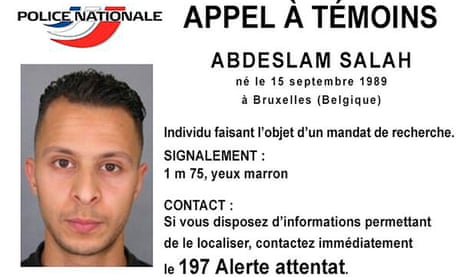
The attacks occurred four days after the capture on Friday of Europe’s most wanted man, Salah Abdeslam. He is the sole survivor of the 10 men believed to have been directly involved in the Islamic State attacks that killed 130 people in and around Paris on Nov. 13.
President François Hollande of France vowed “to relentlessly fight terrorism, both internationally and internally.” He added, “Through the Brussels attacks, it is the whole of Europe that is hit.”
The French government ordered 1,600 extra police officers to patrol the nation’s borders, including at train stations, airports and ports. The National Assembly, the lower house of Parliament, observed a moment of silence to honor the dead. The Eiffel Tower was to be lit with the black, red and yellow colors of Belgium’s flag on Tuesday night.
Prime Minister David Cameron of Britain called an emergency meeting of ministers. Foreign Minister Frank-Walter Steinmeier of Germany said the attacks “aim at the heart of Europe.” Pope Francis expressed condolences.
President Obama, speaking in Havana, expressed solidarity with the victims in Brussels. “This is yet another reminder that the world must unite, we must be together, regardless of nationality or race or faith, in fighting against the scourge of terrorism,” he said. “We can and we will defeat those who threaten the safety and security of people around the world.”
Before the speech, Mr. Obama called Mr. Michel, while Secretary of State John Kerry called Didier Reynders, Belgium’s foreign minister.
Since the Paris attacks, security experts have warned that Europe was likely to face additional assaults by the Islamic State and by other terrorist groups.
The Paris attacks showed that the scale and sophistication of the Islamic State’s efforts to carry out operations in Europe were greater than first believed, and analysts have also pointed to Europe’s particular vulnerabilities. They include the huge flow of undocumented migrants to the Continent from the Middle East last year, the movement of European citizens between their home countries and Syria to fight with the Islamic State, and persistent problems with intelligence sharing among European countries and even between competing security agencies in some nations.
Photo
The Belgian federal prosecutor’s office confirmed the three men in a picture published in the Belgian news media are suspects in the airport bombings.
Few countries have been more vulnerable than Belgium. It has an especially high proportion of citizens who have traveled to Syria or Iraq, insular Muslim communities that have helped shield jihadists, and security services that have had persistent problems conducting effective counterterrorism operations, not least in its four-month effort to capture Mr. Abdeslam.
The Belgian capital’s threat level was raised to the highest after the attacks. Mr. Van Leeuw, the Belgian federal prosecutor, said that border controls had been strengthened and extra police officers mobilized.
All flights to and from Brussels Airport were canceled indefinitely, with flights scheduled to land there diverted. Subway, tram and bus travel was shut down. Eurostar canceled its trains connecting Brussels with London. Thalys, which runs high-speed trains linking dozens of cities in Belgium, France, Germany and the Netherlands, suspended service. Cellphone lines were jammed as panicked travelers and Belgians tried to make calls.
A passenger at the airport, Jérôme Delanois, said he was at an Internet cafe near the Delta Air Lines counter when he heard a thunderous noise. “There were two explosions — one big one and one little one,” he said. “The first one blew all the walls and everything. There were burning flames. The first one was bigger. It blew out all the windows.”
Belinda How, a traveler from Malaysia who was in Brussels for a vacation, said she had been lining up to check in for an Etihad Airways flight when she heard the blast. “I was the last passenger queuing up,” she said. “I was very close to the first blast. Everybody was screaming.”
She added: “I said to my son — he is a Down syndrome special-needs child — ‘You have to run.’ He said, ‘My leg hurts.’ I think he was panicked. I left my luggage, dragged him and ran. Before I ran out, there was another bomb.”
BRUSSELS TERROR ATTACKBelgian Bomb Called a Suicide Attack
Video
Belgian Bomb Called a Suicide Attack
The Belgian prosecutor Frédéric Van Leeuw said the explosion at the Brussels airport on Tuesday morning was probably a suicide attack, and Prime Minister Charles Michel said Belgium had anticipated a terrorist attack.
By REUTERS on
Publish Date
March 22, 2016. Photo by Laurent Dubrule/European Pressphoto Agency. Watch in Times Video »
Alan Merbaum, who had flown in from Washington, said he had narrowly avoided the blast.
“I heard what sounded like a thud a minute or so before 8 a.m.,” he said. “It sounded like it could have been something dropped off the back of a truck. Ten to 20 seconds later, I heard a loud explosion and I immediately knew what it was. I saw smoke coming out of the front entrance of the airport.”
Photographs posted online showed passengers covered in blood and soot, looking stunned but conscious. Some passengers were seen being taken
Other images posted on social media showed smoke rising from a departure hall, where the windows had been blown out, and people running away from the building. Hundreds were herded outside.
A third bomb was planted at the airport, but failed to go off, said Lodewijk De Witte, the governor of Flemish Brabant, the province that surrounds Brussels.
Even as emergency responders raced to the airport, which recorded 23.5 million passengers last year, a thunderous explosion rocked downtown Brussels, in the busy Maelbeek station, at the height of the morning rush.
“We felt a boom, we felt the building tremble,” said Henk Stuten, 50, who works for the European Commission in an office above the station. “We saw through the windows that people were rushing out of the metro exit.”
About 10 to 15 minutes later, the office was evacuated, Mr. Stuten said. Some people were “very calm,” and others were “very emotional,” he added.
He said most of the wounded were on the Rue de la Loi, outside the station, which serves the area that houses most of the European Union’s core institutions.
“There were colleagues who just five minutes before were in the metro,” he said. “You realize how close these things can come to you.”
Brian Carroll, 31, a communications consultant from Washington, said he was on a subway car near Maelbeek en route to a conference in downtown Brussels when he heard a loud blast.
“As we were pulling into the station, there was suddenly a loud explosion,” he said in a phone interview. “There was smoke everywhere. Everyone dropped to the ground. People were screaming and crying.”
Mr. Carroll said he had remained on the ground for one or two minutes, then got up, pried open a door of the subway car with his hands and fled. “I thought to myself, ‘I’ve got to get out of here,’ ” he said. “I headed toward an exit. There was smoke and soot everywhere. There was glass everywhere. It was like running through a cloud of dust. I saw the exit of the station was destroyed. I ran out of the station; I ran as far as I could.”
Earlier in the morning, police officers taped off the numerous streets leading to the subway station as emergency vehicles raced to the blast site. Ambulances were clustered around the entrance, next to the normally busy Rue de la Loi, which runs through the heart of the so-called European quarter. A police helicopter flew overhead.
Yvan Mayeur, the mayor of Brussels, warned that the death toll of 20 at the subway station could rise.
“The situation in the subway is extremely chaotic,” he said at a news conference. “Forensic police have lots of work ahead to identify the victims. It will be long and difficult work.”
Belgium has emerged as a focus of counterterrorism investigators after the attacks in Paris.
On Monday, the Belgian authorities asked for the public’s help in finding Najim Laachraoui, 24, whom they identified as an accomplice of Mr. Abdeslam. The authorities are also searching for Mohamed Abrini, 31, who was filmed with Mr. Abdeslam at a gas station on a highway to Paris two days before the Nov. 13 attacks.


 Del total de casos de dengue notificados hasta ahora en Córdoba, 327 se dieron en la Capital cordobesa, mientras que 85 se dieron en distintas ciudades del interior. Entre las localidades con casos autóctonos, se agregó Las Varillas y entre las que registran importados, se sumaron San Francisco y Adelia María; cada una con un caso.